Walking the Last Capital
Why Namhansanseong Haenggung (남한산성 행궁) matters more than most visitors realize
There are places that impress at first glance, and there are places that unfold more slowly, asking for patience before they yield their meaning. Namhansanseong Haenggung (남한산성 행궁), the palace complex inside Namhansanseong (남한산성), belongs unmistakably to the second kind. It is not a destination of instant spectacle. It does not dazzle like a grand ceremonial palace in central Seoul. It works differently. It gathers force through ascent, through air, through the line of a fortress wall moving over the mountain like a sentence written across the landscape. And then, almost quietly, it reveals what it once was: not merely a royal retreat, but part of a fully imagined emergency capital, a place where a kingdom prepared to survive crisis. UNESCO describes Namhansanseong as a fortified city and an emergency capital of the Joseon dynasty, located southeast of Seoul and shaped by centuries of military, political, and religious history.
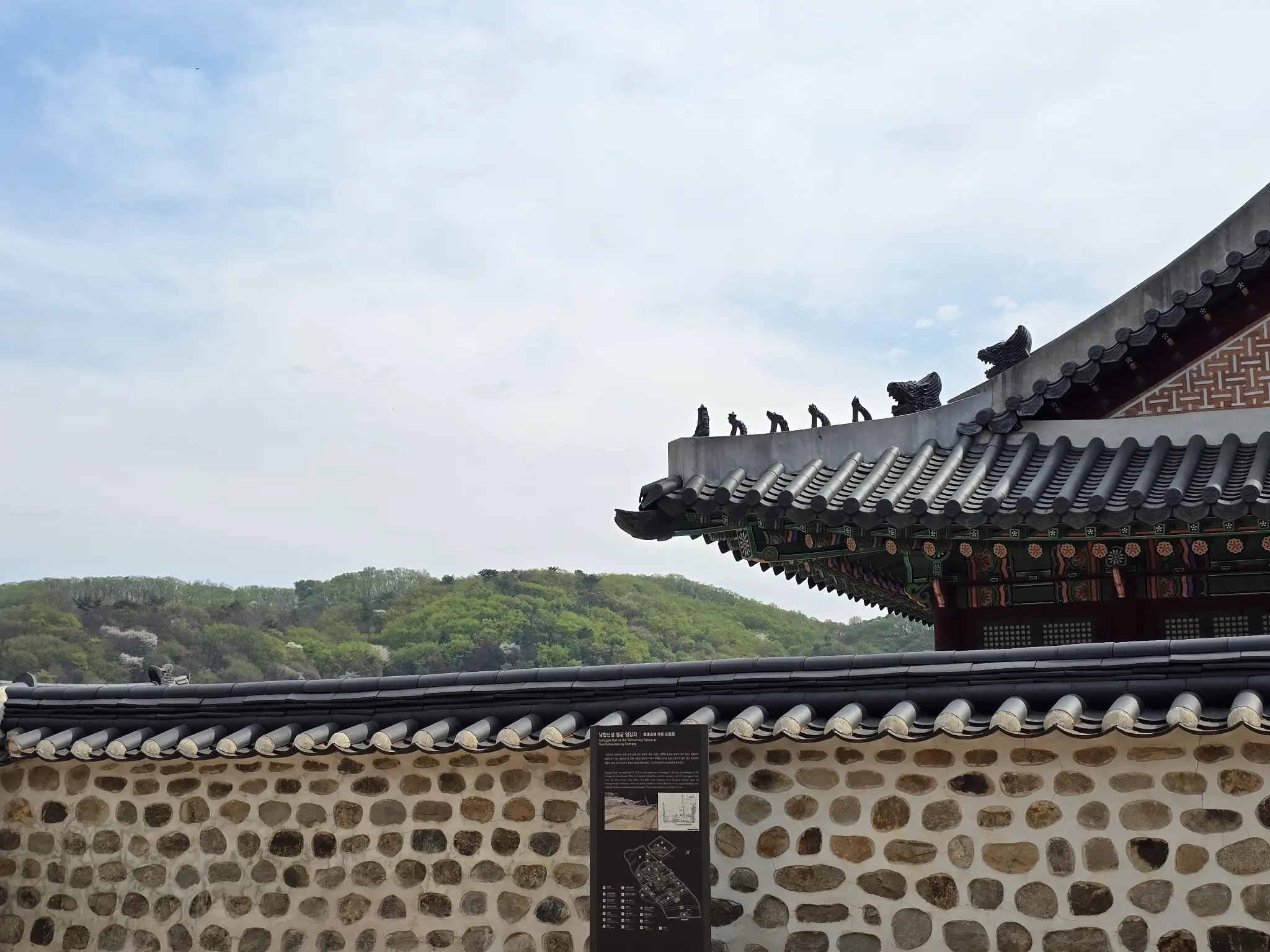
For foreign visitors, this distinction matters. If Gyeongbokgung is the architecture of sovereign display, Namhansanseong Haenggung is the architecture of sovereign endurance. The site gained its most enduring historical meaning during the Manchu invasion of 1636, when King Injo took refuge here. Yet the value of the palace lies not only in that dramatic episode. Korean heritage authorities emphasize that this was not a simple temporary lodging for a displaced monarch. It was a highly significant administrative and ceremonial complex within the mountain fortress, part of a broader system designed to preserve the functions of the state in wartime. In other words, this was not just where the king slept. It was where the nation tried to continue.
That is what makes the site so compelling today. To visit Namhansanseong Haenggung is to encounter a different Korea: not the hyper-speed Korea of neon retail districts, not the globally familiar Korea of pop culture and shopping streets, but a quieter Korea, one that reveals how power, fear, geography, and memory once converged in the mountains just beyond the capital. It is a place where statecraft became landscape. And for English-speaking travelers, that is precisely why the visit can be so meaningful. This is not simply a side trip from Seoul. It is a way of understanding how Korea imagined resilience.
A Fortress That Must Be Walked to Be Understood
Namhansanseong is best grasped not as a monument but as a sequence. One enters, walks, climbs, pauses, looks, and only then begins to understand. The palace complex itself is important, but it is the relationship between the Haenggung (행궁), the fortress walls, the command post, the gates, the ridgelines, and the mountain air that gives the site its emotional and intellectual weight. Official tourism materials in English, Japanese, and Chinese all present the area not as a single-building attraction, but as a wider heritage environment with fortress trails, scenic overlooks, military architecture, shrines, and linked cultural sites.
That makes Namhansanseong unusually legible to those travelers who prefer places that are discovered through movement. It is, in the deepest sense, a walking destination. The beauty here is cumulative. A tiled roof seen against the mountain light. A stone wall bending into the trees. A pause at Suojangdae (수어장대), where command once meant both surveillance and vulnerability. The official tourism pages describe several fortress walking routes and emphasize the natural scenery surrounding the heritage zone, underscoring that the site's appeal lies as much in the embodied experience of traversing it as in the historical facts attached to it.
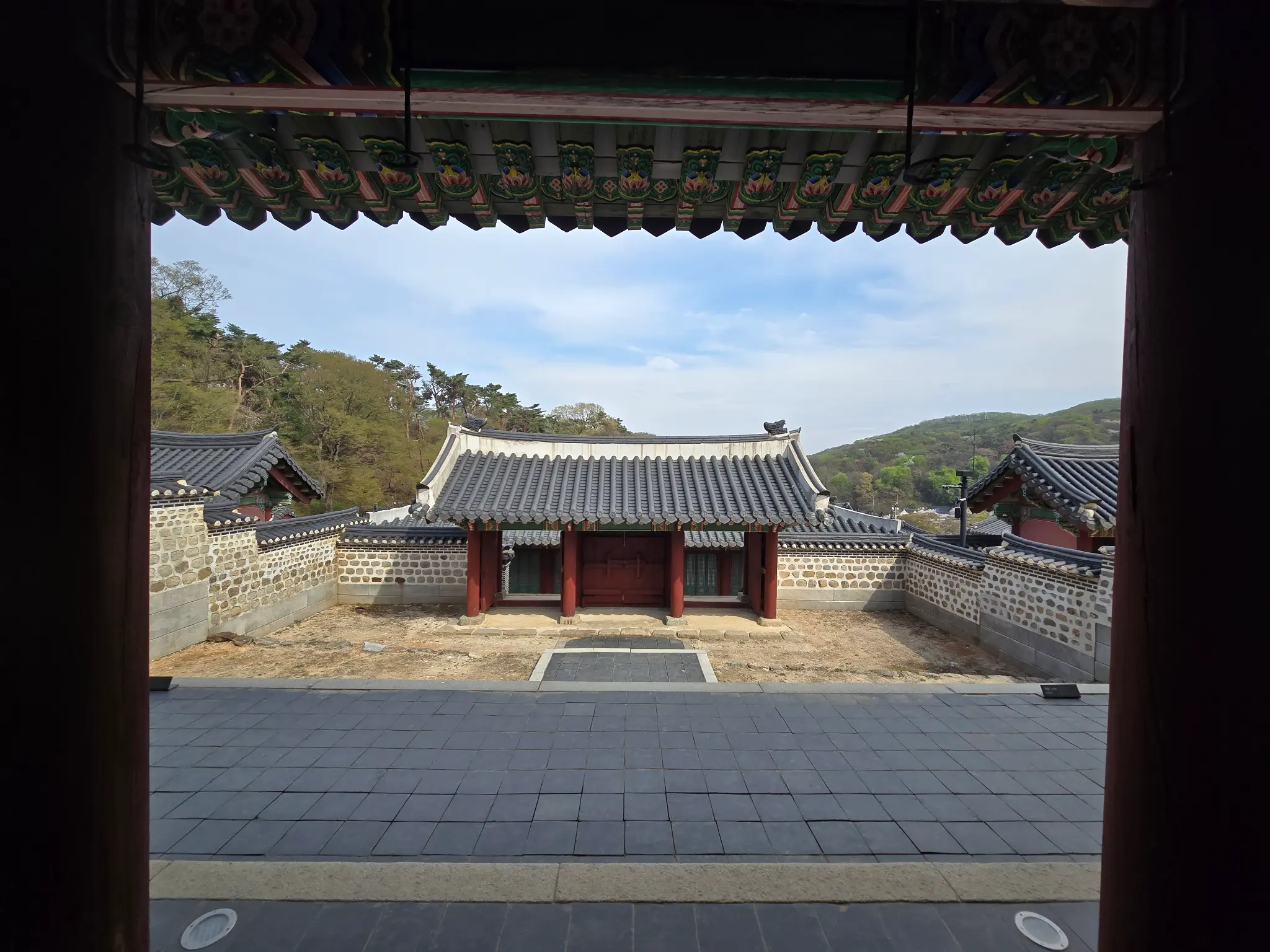
This matters especially for visitors from English-speaking countries, many of whom are now searching for more than iconic photo opportunities. Increasingly, the most memorable travel experiences are those that offer narrative, atmosphere, and perspective. Namhansanseong does all three. It tells a coherent historical story. It surrounds the visitor with a mood of gravity and calm. And it offers an elevated literal perspective over the region, allowing one to see the capital area not as an abstract metropolis but as a strategic terrain. UNESCO's framing of the site as an emergency capital and fortified city gives international visitors the interpretive key they need: this is not simply a scenic mountain palace. It is the built expression of a state preparing for survival.
That is also why the site feels emotionally different from more ornate palace compounds. It is less about royal performance than about political tension. Less about ceremony than contingency. Less about display than defense. And for many foreign visitors, that difference is precisely what lingers. Reviews by international travelers often praise the fortress walks, wooded paths, serenity, and views, suggesting that what stays with them is not a single postcard image but a layered sense of history embedded in the landscape.
Why the Visit Means More Than a Day Trip
To understand the value of Namhansanseong Haenggung for international visitors, one must resist the temptation to treat it as a lesser alternative to central Seoul. It is not a substitute for the better-known palaces. It is a different kind of encounter altogether. Gyeongbokgung explains court ceremony. Changdeokgung teaches spatial harmony. Namhansanseong Haenggung, by contrast, teaches what power looks like under pressure.
That gives the site extraordinary interpretive value. For travelers interested in Korean history, it reveals how the Joseon state conceived continuity in the face of invasion. For those interested in architecture and urban thought, it offers a powerful example of a mountain fortress city in which political, military, and ritual functions were combined. For travelers weary of speed and over-curation, it offers something rarer: a destination whose silence is part of its message. UNESCO explicitly notes the site's synthesis of defensive architecture, political symbolism, and cross-cultural influences in fortress design, making it significant not only within Korea but also within broader world heritage discourse.
There is also a more contemporary reason to visit. Many foreign travelers arrive in Korea expecting intensity—screens, crowds, high-tempo consumption, and relentless novelty. Namhansanseong quietly expands that image. It shows that Korean cultural identity is not exhausted by the modern city. It includes retreat, endurance, mountain geography, ritual space, and strategic memory. In that sense, the visit is not only historical. It is corrective. It broadens the emotional map of Korea.
And the visit gains even more value when it is allowed to remain slow. The surrounding area includes not only the Haenggung but also fortress trails and a traditional food village often highlighted in official tourism information. That means the destination can be experienced as a full narrative arc: history, walking, scenery, and local food, all within reach of the Seoul metropolitan area. For foreign visitors, this makes the site especially suitable for a half-day or full-day excursion that feels rich without feeling exhausting.
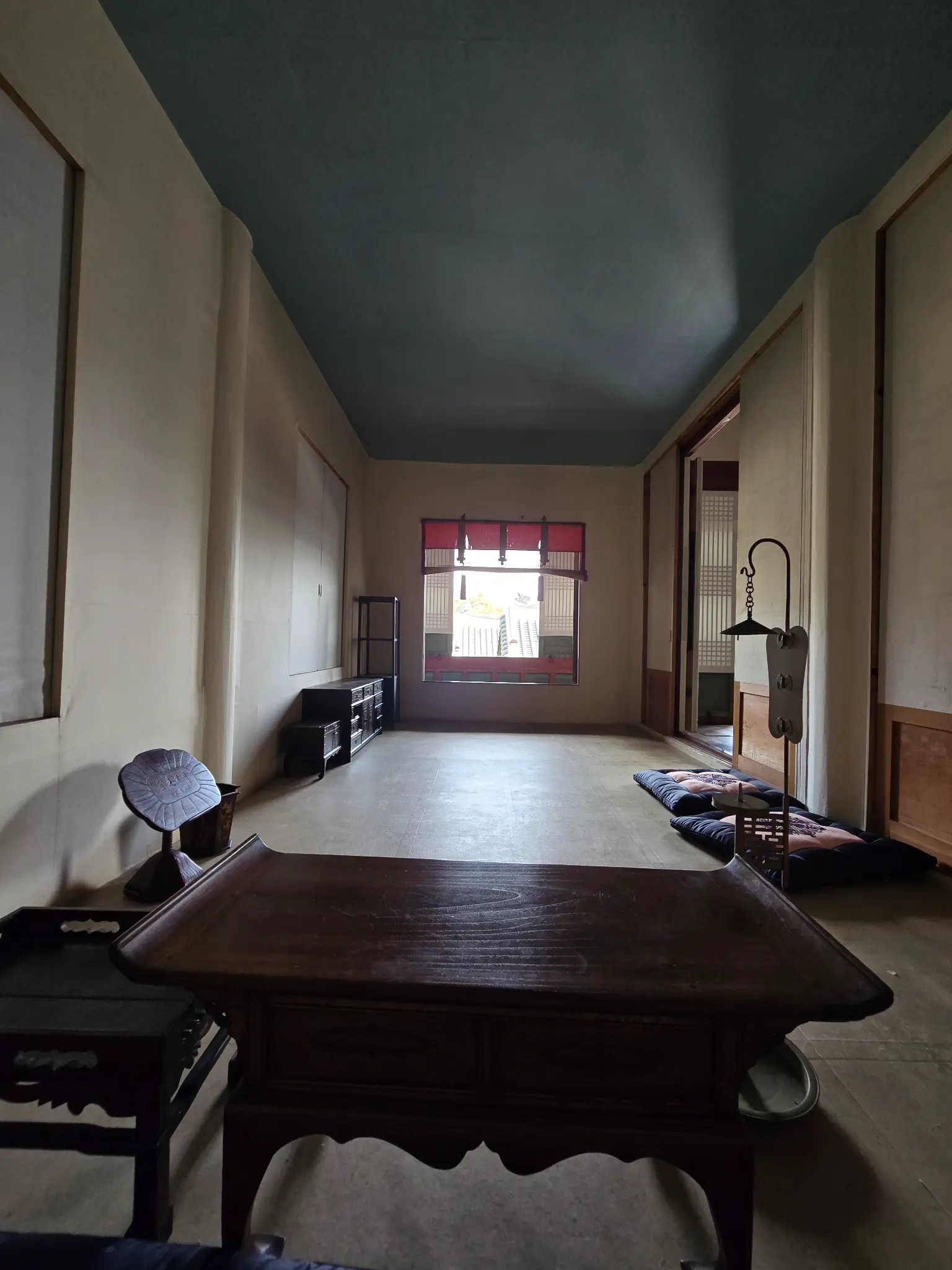
Perhaps that is the most persuasive argument for going. Namhansanseong Haenggung does not merely tell you something about the past. It changes the tempo at which you receive that past. It asks you to walk before you conclude, to look before you categorize, to feel the distance between capital and refuge, and to recognize that a palace can sometimes be most meaningful not when it celebrates power, but when it shelters it.
The Palace Beyond Splendor
For many English-speaking visitors, the word "palace" carries certain expectations: grandeur, ornament, theatrical symmetry, imperial scale. Namhansanseong Haenggung complicates those expectations in the best possible way. It is a palace, certainly, but one defined by context rather than excess. Its value lies in its role within the fortress city and in the historical imagination that produced it. Korean heritage interpretation stresses that the complex held unusual importance among Joseon-era haenggung sites because it was part of a wartime governing structure, not merely an occasional royal residence.
This gives the place a rare moral seriousness. Here, beauty is inseparable from vulnerability. The landscape is lovely, but it is also strategic. The architecture is elegant, but it was never meant to exist in isolation. Everything here points beyond itself—to the wall, the mountain, the gate, the horizon, the possibility of danger, and the stubborn refusal to surrender political order even in moments of profound instability.
That is why Namhansanseong Haenggung deserves more attention from foreign visitors than it typically receives. It offers not only heritage, but perspective. Not only scenery, but structure. Not only tranquility, but meaning. It is one of the best places near Seoul to understand that Korean history was not shaped only in courtly splendor or urban dynamism, but also in mountain fortresses where the state rehearsed survival. To walk here is to encounter a Korea that is thoughtful, restrained, and resilient. And once encountered, it is difficult to forget.
Location on Map
References
Gwangju City. (n.d.). Namhansanseong temporary palace (행궁) cultural property information. Retrieved April 20, 2026.
Korea Heritage Service. (n.d.). Historic information on Namhansanseong Haenggung. Retrieved April 20, 2026.
Korea Tourism Organization. (n.d.). Namhansanseong Provincial Park / Namhansanseong attractions. Retrieved April 20, 2026.
Tripadvisor. (n.d.). Traveler reviews of Namhansanseong Fortress. Retrieved April 20, 2026.
UNESCO World Heritage Centre. (n.d.). Namhansanseong. Retrieved April 20, 2026.


