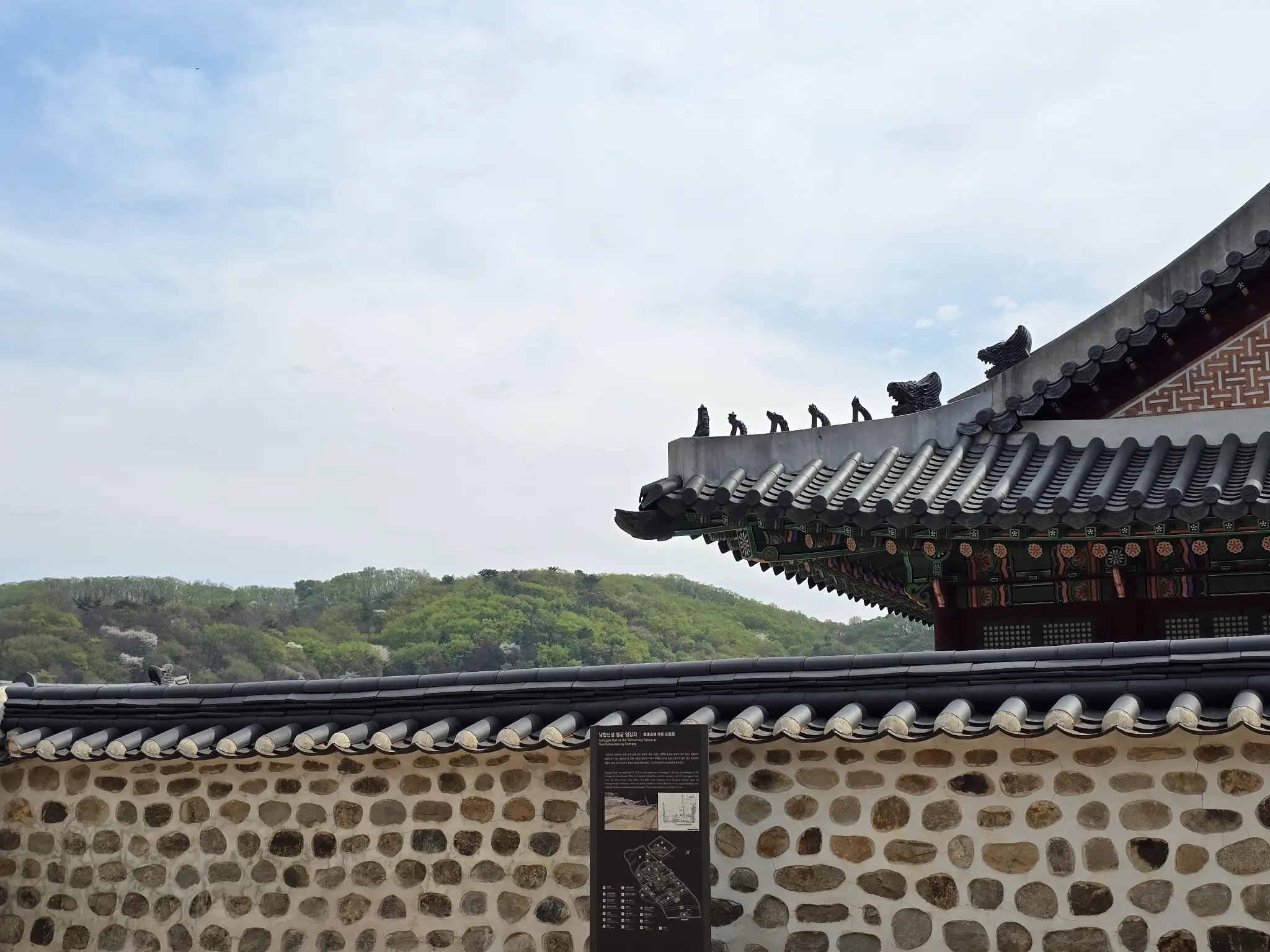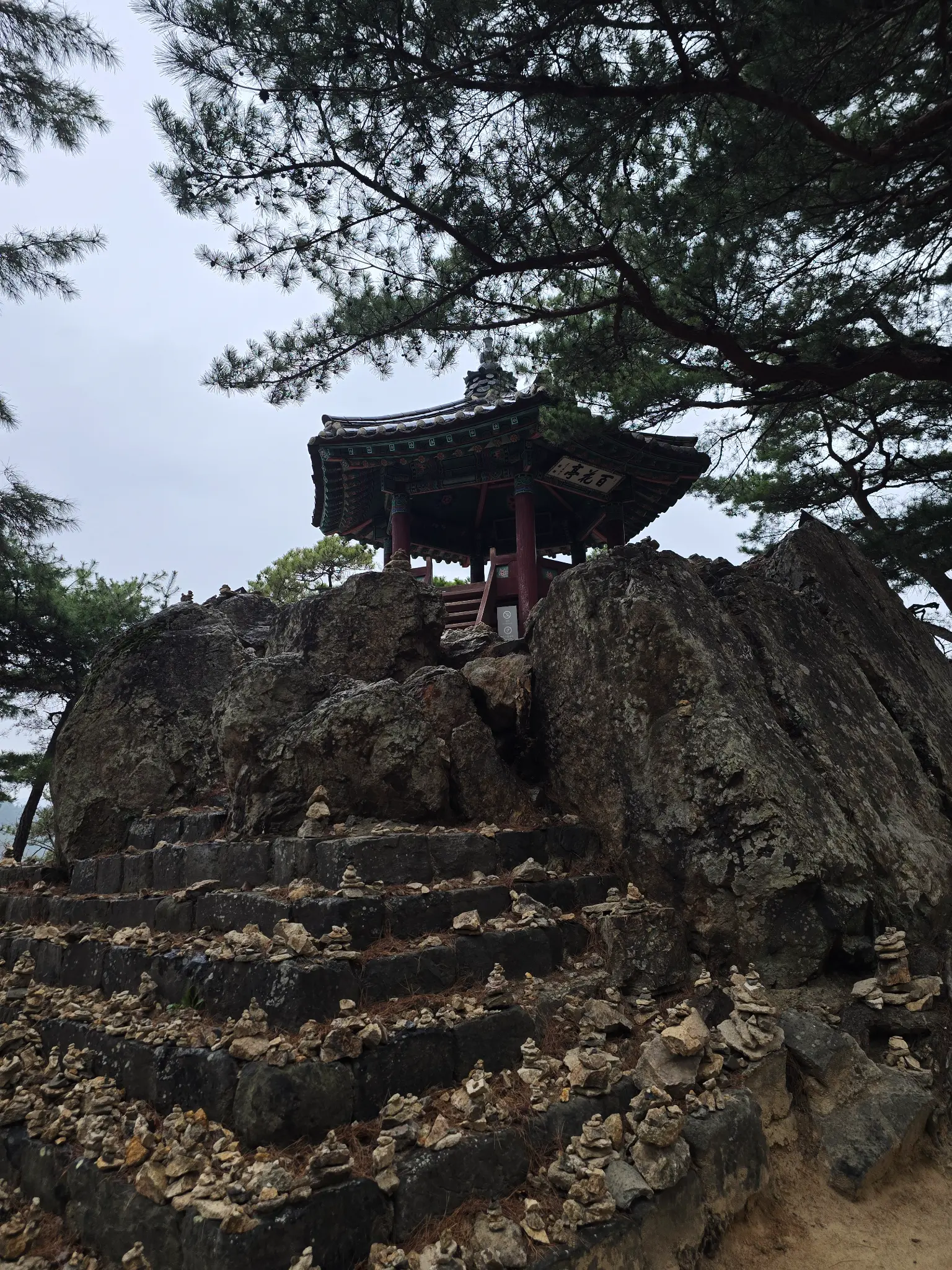
In Buyeo (부여), history does not sit behind glass. It clings to hillsides, drifts over the Baengma River (백마강), and gathers force at Nakhwaam (낙화암), the "Rock of Falling Flowers." Perched at the northern edge of Busosan (부소산), the cliff is one of those rare places where a landscape is inseparable from a national memory. Korean tourism authorities describe it as the site where Baekje court women are said to have leapt to their deaths when the kingdom fell in 660, after the Silla-Tang alliance overran the capital. The name itself transforms loss into metaphor: not bodies, but flowers falling.
For visitors who know little about Korea, Buyeo is best understood not as an isolated county town but as the last capital of Baekje (백제), one of the ancient Three Kingdoms (삼국). UNESCO's inscription of the Baekje Historic Areas places Buyeo within a wider East Asian story: these sites preserve evidence of a kingdom that developed sophisticated urban planning, Buddhist culture, architecture, and artistic exchange with China and Japan between 475 and 660 CE. That matters, because it means Buyeo is not simply a place of defeat. It is also a place of transmission, where culture moved outward even as political power collapsed inward.
That duality gives Nakhwaam its unusual power. It is scenic enough to satisfy the casual traveler and historically charged enough to reward the serious one. The view is tranquil. The memory is not. Standing there, one encounters one of Korea's most enduring paradoxes: beauty preserved by catastrophe.
A Legend, a Kingdom, and the Work of Memory
Like many famous sites, Nakhwaam is wrapped in a story that is emotionally true even when its details are historically difficult to verify. The most famous version is the tale of Samcheongungnyeo (삼천궁녀), the "three thousand court women." The story is deeply embedded in Korean cultural memory, but the official tourism description presents it as legend, not as audited demographic fact. That distinction is important for foreign readers. In Buyeo, the point is not whether the number was literally three thousand. The point is that the story condensed the shock of dynastic collapse into an image that later generations could carry.
This is where Buyeo becomes more than a stop on a heritage itinerary. It becomes a lesson in how nations remember. Busosanseong Fortress (부소산성), which protected Sabi (사비), the last Baekje capital, was not merely a military wall. Official heritage and tourism sources explain that the nearby Gwanbuk-ri (관북리) area functioned as the royal palace and administrative core in peacetime, while the fortress served defensive purposes in wartime. In other words, the landscape around Nakhwaam was once part of a living capital system: palace, fortress, mountain, river. To walk it today is to see how geography once became government.
For an international visitor, that is the most compelling frame. Buyeo is not Korea's version of a single ruined castle or a solitary monument. It is closer to an archaeological cityscape, one whose fragments still speak to each other. The cliff, the fortress path, the river below, and the palace remains nearby all belong to the same historical sentence. UNESCO recognized this precisely because the Baekje sites reveal a refined culture of capital formation, religion, funerary practice, and regional exchange.
And so the emotional experience of Buyeo is not simple mourning. It is layered. One feels the sadness of an ending, certainly, but also the persistence of cultural form. Baekje fell. Baekje style did not.
Why Buyeo Still Rewards the Traveler
Modern tourism often flattens places into single images: a cliff for photographs, a fortress for checklists, a museum for rain. Buyeo resists that flattening. Its real charm lies in sequence. One does not simply "see Nakhwaam." One approaches it through Busosanseong Fortress (부소산성), where the walk itself builds historical tension; one descends in imagination toward Goransa Temple (고란사) at the foot of the cliff, where local tradition says a spring once supplied water cherished by Baekje kings; and one completes the arc at the Buyeo National Museum (국립부여박물관), whose collections interpret the kingdom in material terms rather than legend alone. Tourism officials note that Goransa sits below Nakhwaam along the Baengma River, while the museum, founded in 1929 and now displaying roughly 1,000 relics, is dedicated to Baekje culture.
This is why Buyeo deserves greater international attention. It is unusually legible to outsiders. Even without deep prior knowledge of Korean history, a traveler can grasp the essentials quickly: an ancient capital, a defensive mountain fortress, a tragic legend, a river landscape, a Buddhist presence, and a museum that ties the fragments together. The site rewards both emotion and explanation. It offers what the best cultural destinations offer: not only something to look at, but a way of seeing.
There is also a broader tourism lesson here. Travelers often arrive in Korea with Seoul, Busan, or perhaps Gyeongju already in mind. Buyeo offers a different register: quieter, slower, less immediately spectacular, but perhaps more affecting for that very reason. It is a place where Korean antiquity feels neither theatrical nor over-curated. Instead, it remains exposed to weather, silence, and the long afterlife of story. Nakhwaam is the emotional center of that experience, but Buyeo as a whole is the true destination.
To visit Buyeo, then, is not merely to encounter the fall of Baekje. It is to encounter how a civilization leaves traces in terrain. At Nakhwaam, the river still moves below the cliff. The flowers no longer fall. The story does.
Gallery: Buyeo's Landscape
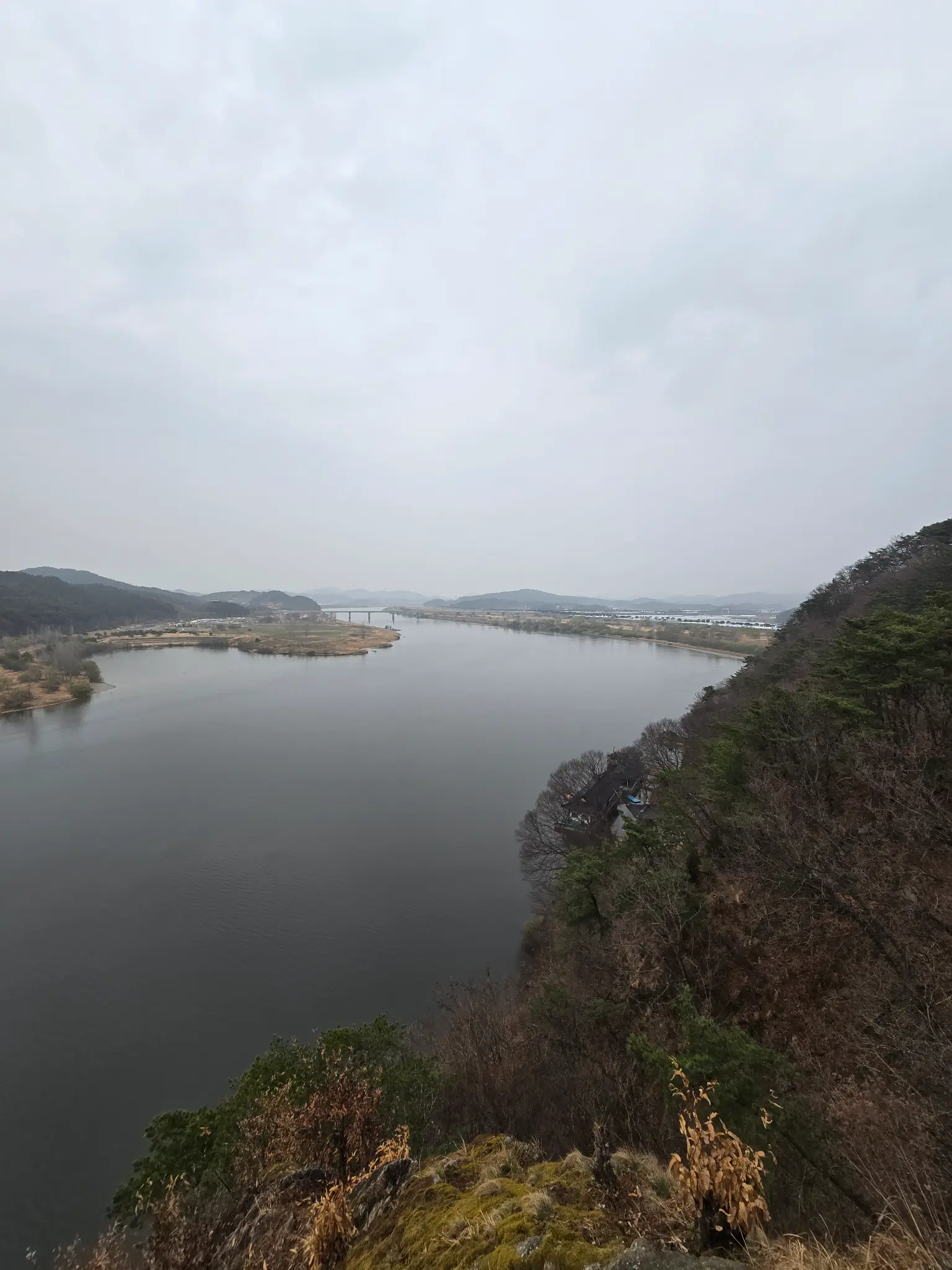 The Baengma River flowing below Busosan, where the landscape once served as a capital system.
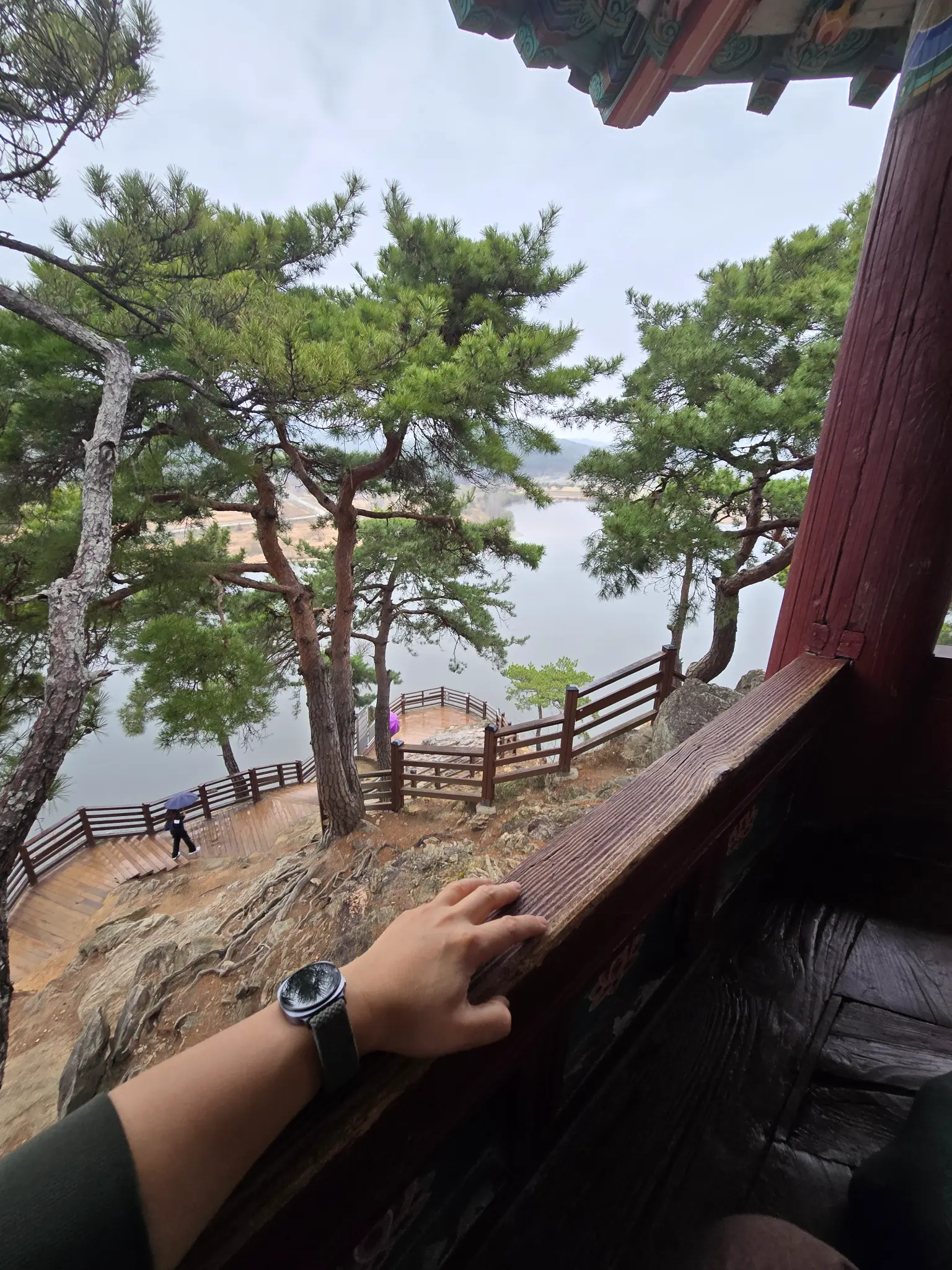 A pavilion overlooking the river from Busosan, offering views of the ancient Baekje territory.
References
Buyeo National Museum. (n.d.). English homepage. National Museum of Korea. Retrieved from https://www.museum.go.kr/
Korea Heritage Service. (n.d.). Busosanseong Fortress, Buyeo - Heritage search. Retrieved from https://www.heritage.go.kr/
Korea Tourism Organization. (n.d.). Archaeological Site in Gwanbuk-ri and Busosanseong Fortress. VisitKorea. Retrieved from https://www.visitkorea.or.kr/
Korea Tourism Organization. (n.d.). Buyeo National Museum (국립부여박물관). VisitKorea. Retrieved from https://www.visitkorea.or.kr/
Korea Tourism Organization. (n.d.). Goransa Temple (고란사). VisitKorea. Retrieved from https://www.visitkorea.or.kr/
Korea Tourism Organization. (n.d.). Nakhwaam Rock (낙화암). VisitKorea. Retrieved from https://www.visitkorea.or.kr/
UNESCO World Heritage Centre. (n.d.). Baekje Historic Areas. Retrieved from https://whc.unesco.org/