The King Who Had to Become Human
Chang Hang-jun's The King's Warden and the New Korean Historical Melodrama
By Professor Seung-chul Yoo
Ewha Womans University
May 3, 2026
〈왕과 사는 남자〉 공식 포스터 — 유배된 어린 선왕 단종 역의 박지훈. 2026년 2월 4일 개봉.
A Village at the Edge of the Kingdom
In Korean historical memory, King Danjong (단종) is less a ruler than a wound. He was the child-king who inherited the throne of Joseon too early, lost it too soon, and died in exile before he could become the sovereign his lineage promised. The King's Warden (〈왕과 사는 남자〉) begins from that national wound, but it does not stage history as a marble monument. It takes the fallen king out of the palace and places him in a poor village, where hunger, fear, rumor and opportunism are as historically meaningful as court intrigue.
The film, released in Korea on February 4, 2026, is directed by Chang Hang-jun (장항준) and stars Yoo Hai-jin as Eom Heung-do (엄흥도), Park Ji-hoon as Danjong, Yoo Ji-tae as Han Myeong-hoe (한명회), and Jeon Mi-do as Mae-hwa. The Far East Film Festival lists the film as a 117-minute Korean historical drama, with screenplay credit shared by Hwang Sung-goo and Chang Hang-jun.
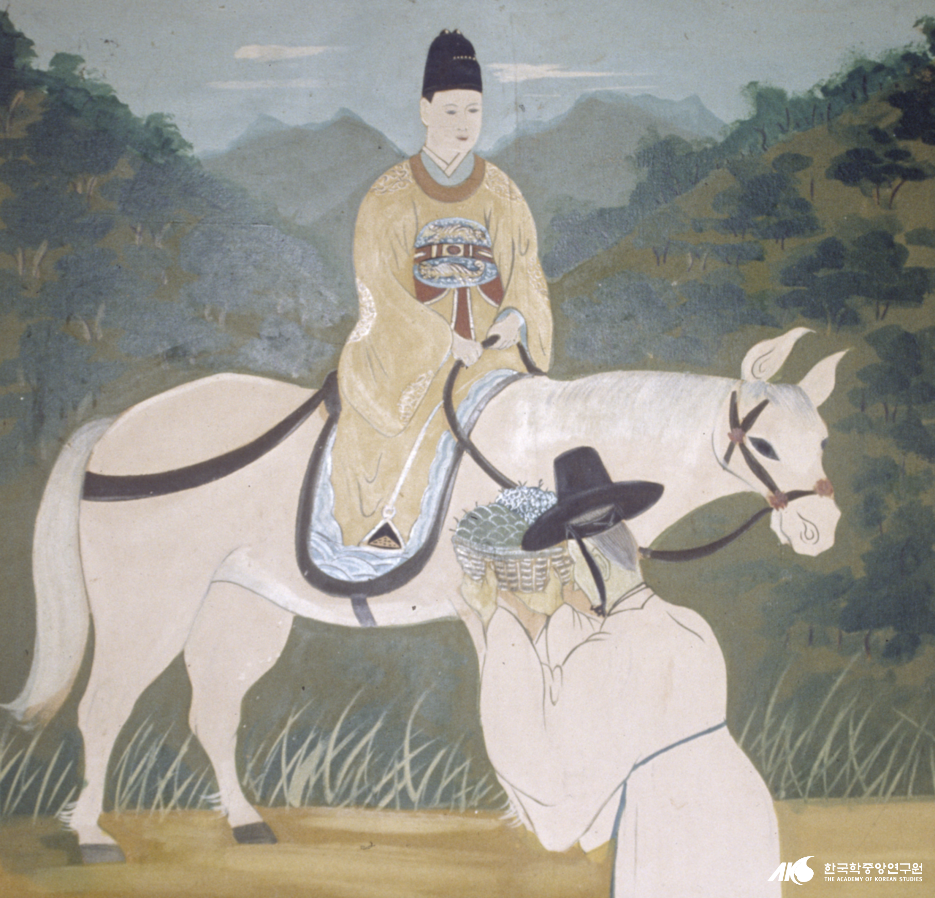
The historical skeleton is real. Danjong was the sixth king of Joseon, enthroned as a child, displaced by his uncle Suyang Daegun, later King Sejo (세조), and sent to Yeongwol after the collapse of restoration efforts. Official Korean historical sources record that Danjong stayed first at Cheongnyeongpo (청령포) and later moved to Gwanpungheon (관풍헌), where his final days are remembered.
But the film's emotional body is invention. Eom Heung-do is a documented figure: the local official remembered for recovering Danjong's body and arranging his burial despite fear of punishment. The Encyclopedia of Korean Culture describes Eom as a Yeongwol local officer who retrieved the king's corpse and buried him after Danjong's death. Yet the friendship, the domestic intimacy, the meals, the arguments, the slow mutual transformation between fallen king and provincial guardian — these are not facts in the strict archival sense. They are the film's imaginative answer to a question history leaves open: what kind of person would risk everything for a dead king?
That is why The King's Warden is best understood not as a documentary-minded sageuk (사극) but as a work of historical emotional reconstruction. Its central truth is not evidentiary but moral. It asks what loyalty (충의) means when it no longer brings reward, when the king is no longer powerful, and when the act of remembrance itself may be treated as treason.
Images
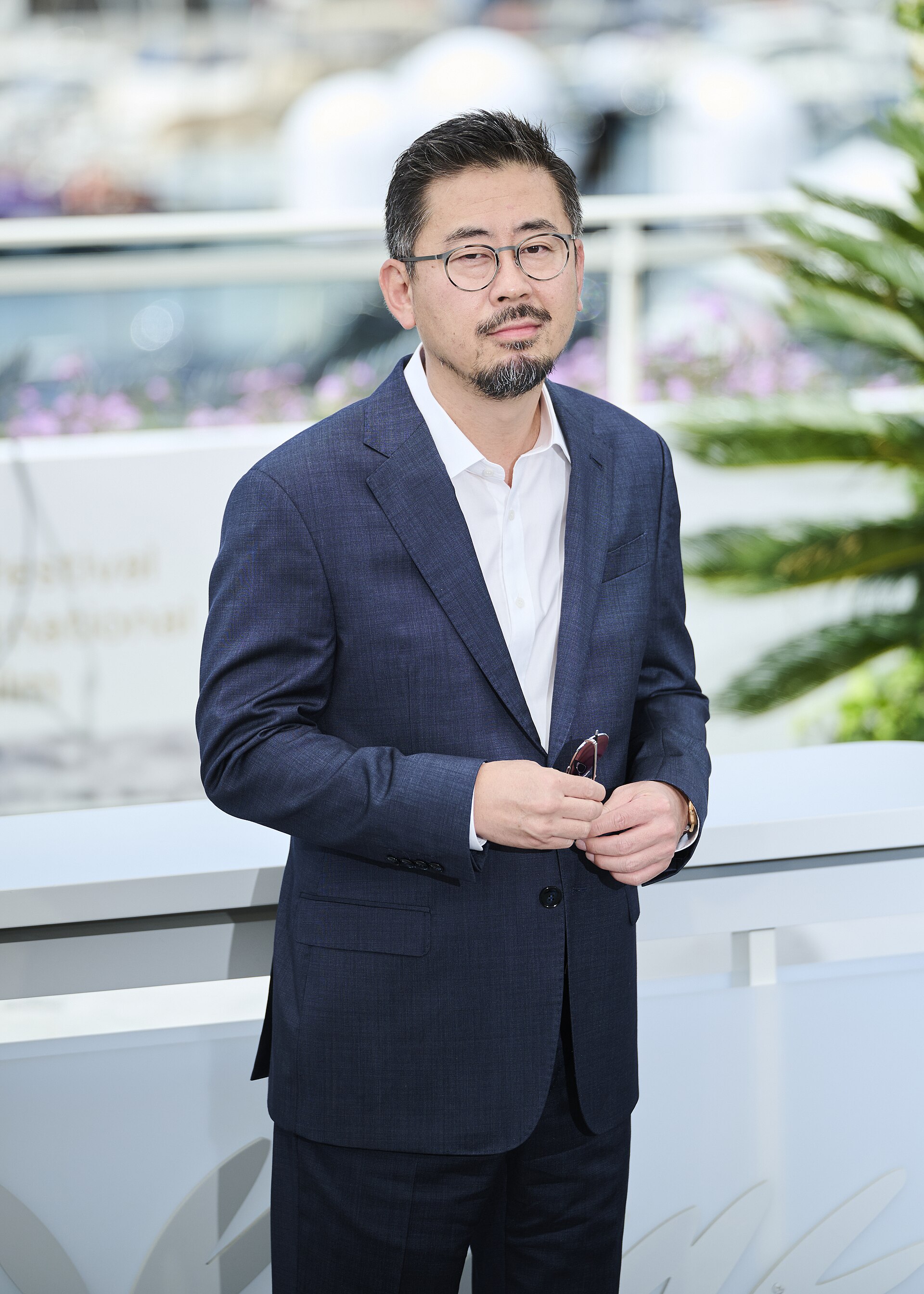
Official poster for The King's Warden, featuring the two lead characters at a traditional Joseon-era gate, with the film's title and release date (February 4, 2026).
A scene from The King's Warden showing the intimate relationship between the fallen king and his provincial guardian, highlighting the film's focus on human connection over historical spectacle.
금성대군 역의 유지태 — 단종 복위를 위해 싸우는 왕족. 붉은 배경의 용 그림자가 권력 투쟁의 긴장을 상징한다.
Chang Hang-jun's Warm Rebellion
Chang Hang-jun is an unlikely author of a box-office historical epic, which may be precisely why the film works. He is not usually associated with solemn statecraft or heavy historical fatalism. His reputation was built through comedy, television, genre writing, and an unusually public persona as a witty, talkative, emotionally accessible filmmaker. KOFIC's English profile describes him as a screenwriter and director known for comedy films and television work, noting his path from Seoul Art College to the set of Kim Young-bin's No Emergency Exit in 1993, and later to his breakthrough as a screenwriter and director.
His educational background is also revealing. Seoul Institute of the Arts identifies Chang as a SeoulArts alumnus from the Theater major, class of 1989 (연극전공 89학번), while KOFIC's English database describes his 1992 graduation from Seoul Art College in film. The slight institutional discrepancy matters less than the cultural point: Chang emerged from a performance-oriented creative milieu, not from a purely academic historical tradition.
That background shows in The King's Warden. Chang is less interested in recreating the machinery of court than in staging the fragile theater of human recognition. A king arrives in a village. At first, he is a burden, perhaps even an economic opportunity. Gradually, he becomes a child, a guest, a sovereign, a moral test. The villagers do not merely encounter monarchy; they encounter responsibility.
In an interview with Korea JoongAng Daily, Chang said he did not want to reproduce Danjong as merely weak. He argued that the image of Danjong as powerless was shaped largely by political outcome — dethronement, exile, death — rather than by evidence of his character. Chang pointed instead to records that described Danjong as bright, perceptive and loved by King Sejong and his father.
That directorial choice is central. Chang does not rescue Danjong by making him powerful in the conventional sense. He rescues him by giving him interiority. The film's Danjong is not simply a victim of history; he is a young person forced to understand the moral poverty of power too early.
This is where Chang's comic instincts become unexpectedly serious. The film begins with the grammar of ordinary appetite: meat, rice, status, scarcity, village gossip. The Guardian's review observed that the film initially flirts with comedy about upward mobility before shifting into sentiment, social commentary and political thriller. That tonal instability can be read as a flaw. But it is also the Chang Hang-jun signature: history must first be made habitable before it can become tragic.
His direction opens a light door into a dark room.
Fact, Fiction, and the Politics of Remembering
The film's most powerful cultural function lies in its deliberate blurring of record and imagination. Korean viewers know the outline of Danjong's tragedy. They know the uncle, the throne, the exile, the early death. What many did not know — at least not with emotional clarity — was Eom Heung-do. The film transforms him from a footnote of loyalty into a national protagonist.
That transformation has consequences. Historians have already noted that some filmic choices are compressed or fictionalized. MediaToday explains that the historical records concerning Danjong's death are themselves inconsistent: the Sejo Sillok records suicide, while later sources describe poison or other forms of killing. The article also notes that the film combines later narrative traditions and merges roles that were not necessarily identical in the historical record.
The most important distinction is this: Eom Heung-do's recovery and burial of Danjong's body is historically grounded; his intimate relationship with Danjong before death is not firmly documented. MediaToday states clearly that there is no surviving record that tells us what kind of relationship Danjong and Eom had, and that the film imagines their bond from the existing records.
NoCutNews, citing historians, also complicates the film's use of the term "village chief." Eom was more commonly remembered as a hojang (호장), a local administrative figure, not simply a rustic village headman. The article notes that the film likely uses "chief" or "village leader" for audience clarity, while historians debate how much authority Eom would have had in local society.
This matters because The King's Warden is not merely about one man's kindness. It is about how modern Korean popular culture converts archival fragments into moral cinema. The film turns 충의 (loyal righteousness) into something emotionally available to contemporary audiences. It asks viewers to admire not the winner of history, but the person who behaved decently after history had already declared him irrelevant.
Its box-office success suggests that this question struck a nerve. By April 11, 2026, The King's Warden had reached 16,283,970 admissions, becoming the second most-watched film in Korea, behind only Roaring Currents. Earlier, The Korea Times reported that the film had crossed 16 million admissions two months after release, making it only the third film in Korea to reach that threshold.
International reception has been more divided. The Far East Film Festival program described the film as a mostly fictional construction built from brief historical passages in the Joseon Wangjo Sillok (조선왕조실록) while praising its emotional appeal and Yoo Hai-jin's central performance. The Guardian, by contrast, found the film lively but somewhat disjointed, arguing that its movement among comedy, sentiment, social critique and political thriller did not always cohere.
The controversy around authorship adds another layer. In March 2026, The Hankyoreh reported that a plagiarism allegation had been raised by the family of a late playwright who had written a drama scenario about Eom Heung-do. The production company denied the claim, calling the film an original work based on historical facts and stating that its creative process could be documented. At this stage, the matter should be described carefully as an allegation and denial, not as an established conclusion.
What remains, beyond the dispute, is the film's cultural symptom. Korea in 2026 appears to have embraced a historical melodrama not because it offered new information about Danjong, but because it offered a new emotional arrangement: the king is not saved, justice does not triumph, and yet a human being chooses to act as if dignity still matters.
That is Chang Hang-jun's achievement. He does not make history grander. He makes it more vulnerable. He brings the king down from the throne, places him beside a poor man, and asks whether the smallest act of care can outlive the machinery of power.
In that sense, The King's Warden is not finally about monarchy. It is about the ethics of memory (기억의 윤리). It is about a culture looking back at a murdered boy-king and discovering, not in the palace but in the village, the possibility of moral witness.
References
Chang Hang-jun. (n.d.). Korean Film Biz Zone / KOFIC.
Encyclopedia of Korean Culture. (n.d.). Danjong — 단종.
Encyclopedia of Korean Culture. (n.d.). Eom Heung-do — 엄흥도.
Far East Film Festival. (2026). The King's Warden.
Hoad, P. (2026, March 2). The King's Warden review – lively Korean period drama as 15th century deposed monarch takes refuge. The Guardian.
Jin, M.-J. (2026, April 11). The King's Warden becomes second most watched film in Korea, smashes 16.28 million admissions. Korea JoongAng Daily.
Kim, J.-Y. (2026, January 27). Director Chang Hang-jun reimagines "weak" young king's tragic tale in The King's Warden. Korea JoongAng Daily.
Kim, M.-J. (2026, March 10). Plagiarism allegation raised against The King's Warden; production company denies claim. The Hankyoreh.
MediaToday. (2026, February 9). Historical records of Eom Heung-do and King Danjong in The King's Warden.
NoCutNews. (2026, March 9). Was Eom Heung-do really a village chief? Historians examine The King's Warden.
Seoul Institute of the Arts. (2024, October 23). SeoulArts alumni directors release The Killers.
The Korea Times. (2026, April 5). The King's Warden surpasses 16 mil. admissions.
우리역사넷. (n.d.). 단종 1441–1457.