The Mountain at the End of the Workday
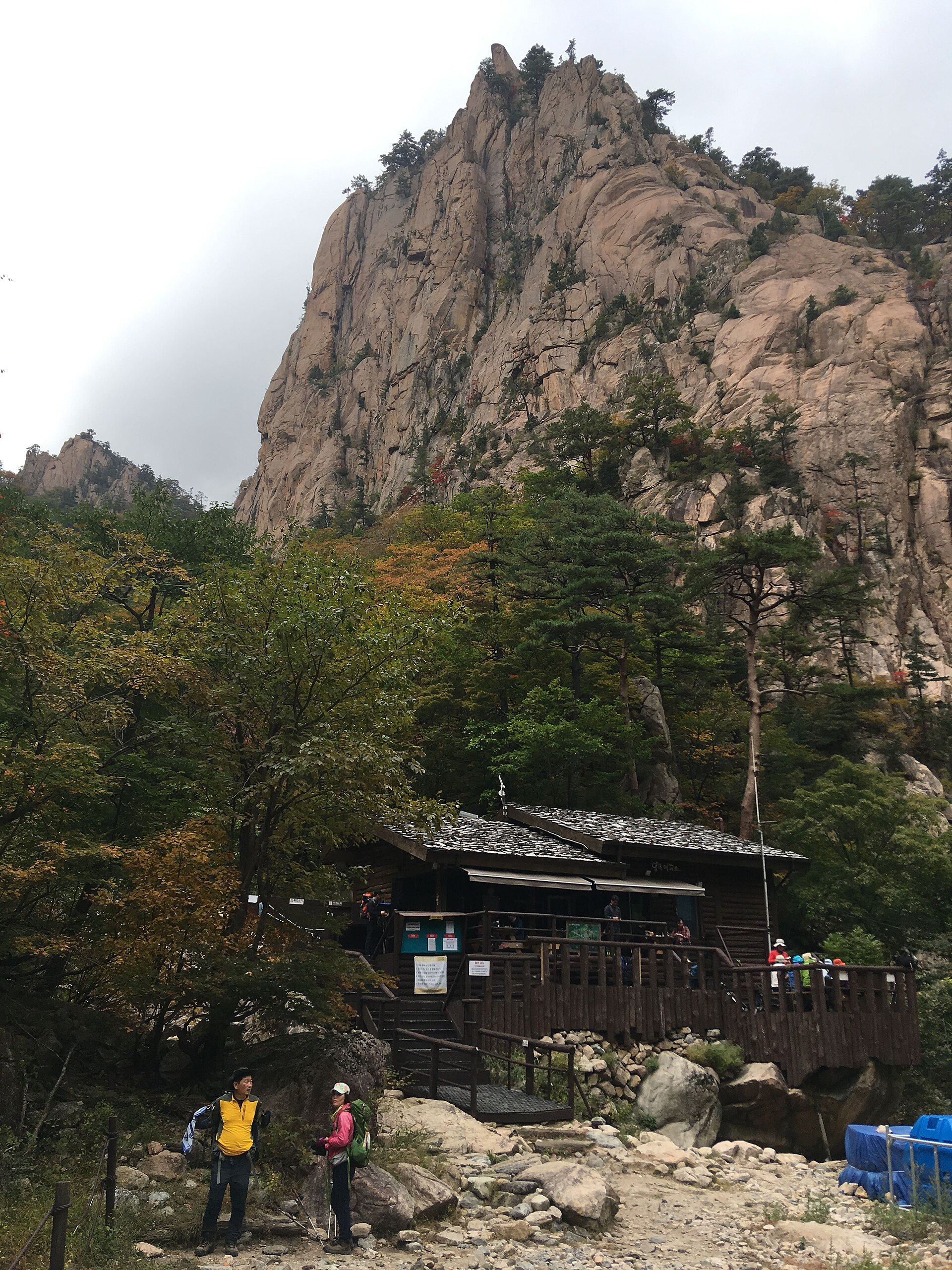
South Korea has produced some of the most kinetic cultural forms on earth: precision pop, speed-edited variety television, hypercompetitive melodrama, and digital platforms that seem to refresh at the pace of anxiety itself. And yet one of its most enduring programs asks viewers to do something almost subversive. Slow down. Listen to the fire. Watch the steam rise from a pot. Follow a host up a rough mountain trail until, somewhere beyond the asphalt and apartment towers, a figure emerges from the trees—a jayeon-in (자연인, "natural person") who has chosen to live beyond the ordinary circuitry of urban life.
That is the simple, almost mystical premise of I Am a Natural Person (나는 자연인이다), MBN's long-running program, which premiered on August 22, 2012, and has since become one of the most distinctive fixtures in Korean television culture. Over the years, the show grew from modest early ratings into a durable hit, at points surpassing 7 percent nationwide and remaining visible in Gallup Korea's rankings of favorite television programs well into the mid-2020s. This is not the success of a fad. It is the success of a ritual.
Its formula is deceptively plain. A host—most famously Yoon Taek or Lee Seung-yoon—climbs into the mountains, discovers a person living there, listens to the story of a former life in the city, and shares a meal made from river fish, wild greens, mountain herbs, or honey gathered from the forest. But what sounds repetitive on paper becomes, on screen, almost liturgical in its emotional rhythm. Each episode begins with ascent, moves into encounter, opens onto confession, and ends in food. Between those points lies the central drama of the program: the transformation of private wound into visible, breathable life. MBN's own descriptions frame the series as a "real human story" filled with the everyday dreams and longings of tired modern people. The phrase is accurate, if understated. The program is less about wilderness than about recovery.
A Country of Speed, A Dream of Subtraction
That recovery is what gives the show its power in contemporary Korea. In a country shaped by compressed modernity—rapid industrialization, relentless educational competition, punishing work culture, housing pressure, and the social choreography of nunchi (눈치), the fine-grained art of reading others' expectations—the mountain appears not merely as landscape but as release. Jayeon (자연, nature) in this context is not only forest and water. It is moral decompression. It is the fantasy of being somewhere no one is watching, measuring, ranking, or requiring quite so much of you. The mountain, in the Korean imagination, is where the exhausted self goes to become legible to itself again.
Part of the fascination of I Am a Natural Person lies in what it reveals about Korean society without ever becoming overtly sociological. The program rarely lectures. It does not need to. Its subjects do the work. Again and again, viewers meet men and women who have come to the mountain after debt, illness, overwork, bereavement, family strain, failed businesses, or some long erosion of spirit that city life could no longer disguise. The series does not frame them as adventurers. It frames them as people who reached a limit.
In that sense, the show belongs to a very Korean emotional archive. It speaks to a society that often prizes endurance, achievement, duty, and outward composure, even as those very virtues can harden into fatigue. To leave the city for the mountain is therefore not only to reject noise. It is to step outside the disciplines of performance. One might say that where much of modern consumer culture promises enhancement—better skin, better salary, better branding, better self—the fantasy here is subtraction. Less humiliation. Less comparison. Less speed. Less nunchi (눈치). Less life lived in anticipation of judgment.
This helps explain the audience that has most consistently embraced the show. Korean polling and press coverage have repeatedly shown especially strong support among older viewers, with men in their 50s and 60s and above particularly prominent, though women in middle and later life also form a substantial audience. That pattern is not incidental. A 2024 scholarly analysis argues that the program resonates strongly with retirement-age and working-class masculinities shaped by decades of industrial growth, labor pressure, and social expectation. The mountain, in that reading, is not simply scenic. It is a site of recovered autonomy—where a man who may have felt diminished by debt, work, or family rupture can once again appear competent, useful, and whole.
But the program would not have endured if it spoke only to men. Its emotional language is broader than that. For many women viewers, the attraction seems to lie in a different register: the quiet of the setting, the tenderness of the life stories, the dignity of survival, and above all the symbolic force of food. In Korean culture, meals often carry emotional meaning more effectively than confession. A bowl of soup can do the work of reconciliation. A rough plate of mountain greens can signify stability more deeply than a speech about happiness. I Am a Natural Person understands this intuitively. The final shared meal in each episode is not merely culinary texture. It is narrative closure. It tells the audience that, despite everything, a life can still be made.
The hosts are crucial to this atmosphere. Yoon Taek and Lee Seung-yoon do not dominate the screen like celebrities imposing their charm on a format. They function instead as urban proxies, carrying metropolitan habits and mild bewilderment into a world ordered by weather, labor, and appetite. They climb awkwardly, react honestly, eat with curiosity, and occasionally fail in ways that make the mountain feel more real. Their role is not to shine but to witness. That distinction matters. In a media culture saturated with self-display, witness can feel almost radical.
Firewood, Wild Greens, and the Afterlife of Modernity
The artistry of the program lies in its structure. Although each episode introduces a new person, the emotional architecture remains remarkably stable. First comes the journey upward. Then the encounter. Then the revelation of the earlier life—often marked by pain, disappointment, or exhaustion. Then the daily practices of mountain living: chopping wood, collecting herbs, tending bees, mending shelter, fishing, fermenting, boiling, surviving. Finally comes the meal, that humble feast by which stranger becomes host and story becomes, however briefly, a form of peace. The repetition is not a flaw but a design. The viewer returns not for suspense but for reassurance. Each week the same quiet promise is made again: that damaged lives may yet be reorganized into meaning.
Some episodes sharpen this promise by bending the expected type. A notably younger jayeon-in (자연인) stands out precisely because he interrupts the assumption that mountain withdrawal belongs only to the retired or defeated. A former global laborer—say, a plant welder who spent decades in the Middle East and South America before retreating into forest life—brings another layer of meaning. In such stories, the mountain becomes not an escape from modernity but its afterlife. The person has seen the global machine from the inside and chosen, finally, something smaller, slower, and less marketable. These are not merely pastoral tales. They are parables of late modern fatigue.
Even the production stories reinforce the program's strange credibility. Reports on filming have described grueling terrain, dangerous conditions, and near-fatal encounters, including hornet attacks. Such details matter because they keep the mountain from becoming decorative. The wilderness in I Am a Natural Person is healing, yes—but never entirely soft. It restores, but it also tests. That ambivalence gives the series a kind of moral seriousness. The forest is not a spa. It is a place where one earns each comfort by hand.
And yet admiration should not cancel critique. The program's most persuasive fantasy is also its most ideologically useful one: that structural suffering can be answered through private withdrawal. Critics have noted that the series can translate social pain into personal adaptation, offering viewers a soothing image of escape while leaving intact the conditions that made escape so seductive in the first place. The mountain may heal the individual, but it can also hide the society that broke him, or her. This tension is not a minor footnote. It is one reason the program deserves to be read as more than lifestyle television. It comforts its audience while quietly documenting the injuries of the world from which that audience longs to disappear.
That is why the title remains so resonant. 나는 자연인이다 does not mean, quite simply, "I live outdoors." It carries a deeper and stranger suggestion: that somewhere beyond the bureaucracies of adulthood, beyond the apartment mortgage, the work badge, the family burden, the competitive script, there remains the possibility of becoming natural again—jayeon-in (자연인), a person restored by jayeon (자연), or at least by the dream of it.
In America, the mythology of reinvention often hinges on expansion—more frontier, more freedom, more self-invention. In Korea, one of the most revealing fantasies is narrower, quieter, more austere. It is the fantasy of subtraction. A smaller room. A shorter sentence. A fire. A creek. A meal. A life no longer performed for others. And that may be the deepest secret of I Am a Natural Person: it is not, finally, a show about leaving society. It is a show about how badly society has made leaving feel like grace.