The Queen, the Machine, and the Memory of Ice
Why Yuna Kim's "Danse Macabre" (죽음의 무도) Returned as More Than a Google Gemini Ad
I. A National Memory Recast as a Brand Narrative
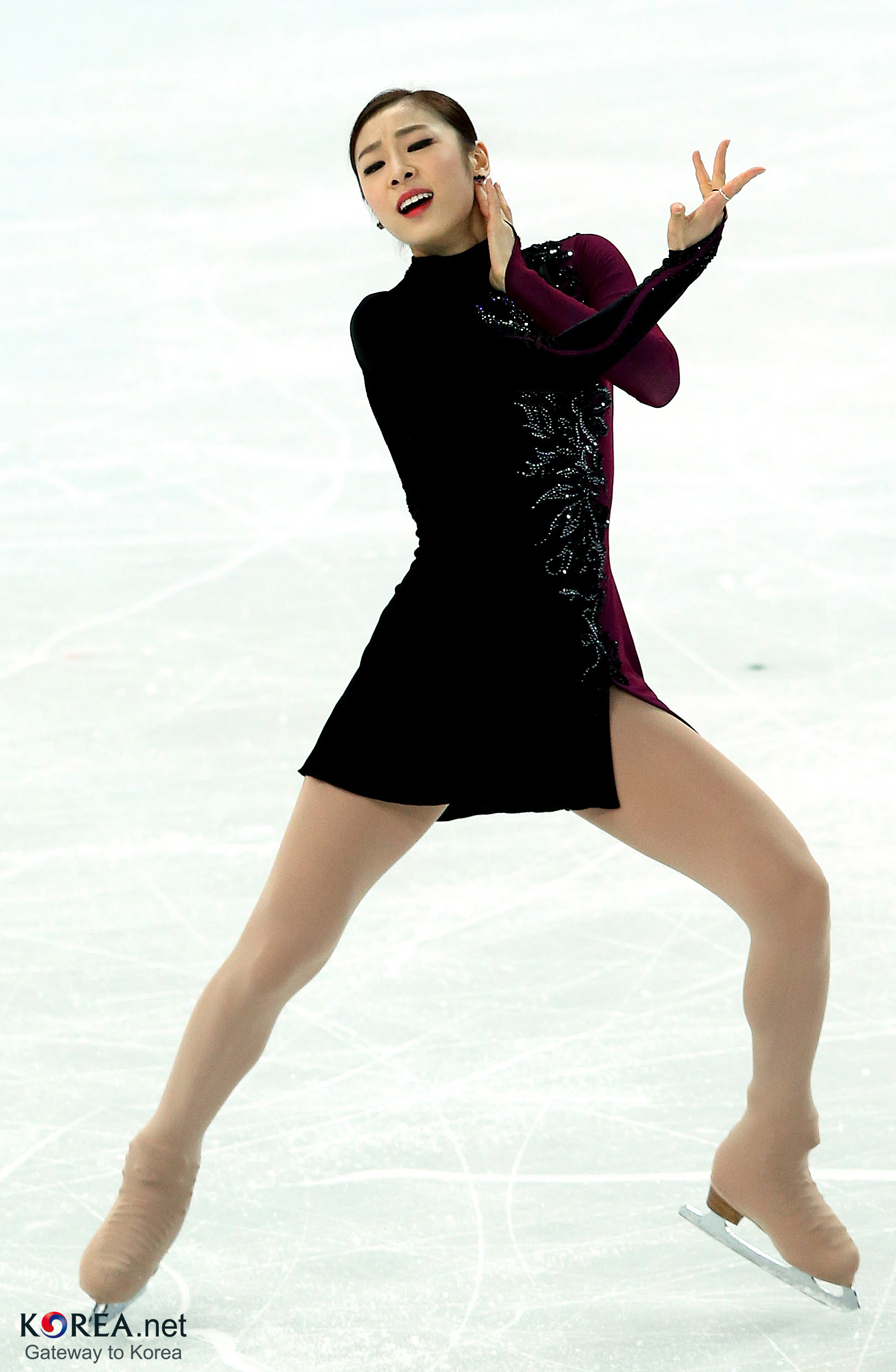
There are public figures who remain famous, and then there are public figures who become a country's emotional shorthand. In South Korea, Yuna Kim (김연아) belongs to the latter category. She is not remembered merely as an Olympic champion or a former figure skater (피겨스케이터). She endures as a symbol of disciplined excellence, aesthetic control, and a distinctly Korean form of modern aspiration—one forged through effort, pressure, and poise. That is why the recent resurgence of attention around her legendary "Danse Macabre" (죽음의 무도) has felt less like an ordinary celebrity comeback than like the reopening of a cultural archive.
The immediate catalyst was commercial, but the effect was cultural. In April 2026, Google Korea released "Yuna Kim's Ballet Challenge | 'Danse Macabre' Full," a Gemini (제미나이) campaign film in which Kim reimagines her iconic 2009 short program not on ice, but through ballet (발레). Google's official account of the campaign presents it as an artistic challenge undertaken long after retirement, with ballerina Kang Sue-jin (강수진) and a broader creative team using Gemini as an assistive tool in choreography, costume, stage ideation, and movement refinement. This is crucial. Google did not merely revive a famous performance; it reframed it as a second act.
That choice was strategically astute because the original "Danse Macabre" carries more than aesthetic prestige. In Korean public memory, it belongs to the era when Kim Yuna was becoming an international emblem of Korean excellence. Google's own campaign narrative explicitly points back to the performance as a legendary routine from her competitive peak, while contemporary coverage repeatedly stresses that the ballet project works because audiences already carry the original inside them as memory, emotion, and national pride. The campaign therefore does not construct meaning from scratch; it borrows a preexisting emotional infrastructure.
What makes this especially compelling is that the campaign understands a basic truth about contemporary brand communication (브랜드 커뮤니케이션): revival alone rarely suffices. Audiences no longer respond deeply to simple repetition. They respond to reinterpretation (재해석). A direct replay of the old program would have produced admiration. But the translation of an iconic skating routine into ballet introduced risk, novelty, and vulnerability. That shift transformed nostalgia into narrative. Viewers were not simply being asked to remember Kim Yuna as she once was. They were being invited to watch what remained possible after mastery had supposedly already been completed.
This is where the advertisement becomes more interesting than an advertisement. The campaign is nominally about Gemini, but its deeper proposition is about the afterlife of talent, memory, and ambition. It presents technology not as protagonist but as enabler (조력자)—a machine not of replacement, but of accompaniment. In an era when AI advertising often fails by making the technology appear domineering, abstract, or threatening, Google instead presents Gemini as a discreet collaborator in a deeply human act of artistic reinvention. That rhetorical restraint is one reason the campaign resonated so strongly.
II. Why Consumers Responded: Trust, Nostalgia, and the Prestige of Difficulty
The most revealing thing about this campaign is not that consumers admired it. It is why they admired it. At the level of consumer psychology (소비자심리), Google solved a difficult problem: how to make generative AI appear not merely useful, but culturally legitimate. AI still carries a residue of suspicion for many consumers. It can seem opportunistic, overhyped, or faintly hostile to human craftsmanship. Google avoids that trap by placing Gemini behind a figure whose public image is inseparable from rigor, sincerity, and excellence. Consumers do not first encounter Gemini as a product. They encounter it as something that Yuna Kim has permitted into a disciplined creative process. In branding terms, the moral authority of the endorser softens the ambiguity of the technology.
That trust transfer is especially powerful in South Korea, where celebrity endorsement often works best not when a star is merely popular, but when the star embodies self-mastery (자기관리). Kim's appeal has never rested solely on charm or entertainment value. She has long represented a socially admired form of earned elegance—grace achieved through labor. This means the campaign draws not only on fame, but on a broader Korean cultural script in which discipline is aestheticized and excellence is moralized. In that sense, the ad does not merely feature a celebrity; it activates a national ideal.
The emotional architecture of the campaign is equally sophisticated. Instead of presenting Kim as an untouchable legend merely performing old greatness, the film and its surrounding coverage stress uncertainty, effort, and bodily adaptation. Reports on the project emphasized the physical challenge of ballet, the unfamiliarity of the form, and the role of Gemini in supporting movement analysis and creative development. This matters because vulnerability (취약성) makes admiration more participatory. Audiences do not only watch perfection; they invest in the attempt. Kim's image remains elevated, but it is made briefly permeable, which allows viewers to project themselves into the narrative.
The campaign also benefits from the prestige of difficulty (난이도). Ballet is not framed here as decorative lifestyle content. It is framed as a serious artistic language with its own embodied grammar, and that grammar is validated by the presence of Kang Sue-jin and other human experts. This is important because it keeps Gemini in the correct symbolic position. AI is not seen inventing culture on its own. It is seen entering an already legitimate artistic ecosystem governed by human authority. The hierarchy remains intact: the artist and master guide, the creative team interprets, and Gemini assists. For consumers uneasy about AI displacing expertise, this arrangement is psychologically reassuring.
Then there is nostalgia (노스탤지어)—but not the cheap kind. The campaign's emotional force lies in what might be called activated nostalgia: memory that does not merely look backward, but generates motion. Because "Danse Macabre" already exists in public consciousness as an iconic performance, its return carries built-in affective charge. Yet by shifting the medium from ice to stage, Google prevents the work from ossifying into reverence. The past is not embalmed; it is tested. This is why the response has been so strong. Audiences are granted the pleasure of recognition, but also the thrill of uncertainty. They know the memory, but not its new shape.
From a marketing perspective, this is a particularly elegant form of storytelling (스토리텔링). The audience comes first for Kim Yuna, then stays for the emotional logic of reinvention, and only afterward absorbs Gemini's brand meaning. In conventional technology advertising, the product is introduced first and its relevance must be argued. Here the relevance is smuggled in through feeling. The consumer's sequence of perception is reversed: icon, memory, challenge, collaboration, then brand. That is precisely why the campaign feels less like a product pitch than like a cultural event.
III. An AI Campaign That Also Tells a Korean Story
To read this campaign only as a successful endorsement would be to miss something larger. It is also a piece of Korean cultural industry (문화산업) storytelling. The original Yuna Kim of 2009 belonged to a moment when South Korea was asserting itself globally through disciplined performance and measurable excellence. The Yuna Kim of 2026 belongs to a different national phase—one in which Korea increasingly exports not only stars and spectacles, but highly refined modes of branded cultural production. This campaign sits at that intersection: multinational technology, Korean celebrity capital, elite artistic symbolism, and emotionally literate digital storytelling.
There is a subtle historical movement here. In her competitive years, Kim often signified Korea's arrival through achievement. In this campaign, she signifies Korea's capacity for cultural authorship (문화적 저작권)—the ability to reorganize memory into content that feels both intimate and globally legible. That transformation mirrors a wider shift in Korean media history. The country once sought recognition through results; it now increasingly shapes international attention through narrative packaging, aesthetic polish, and symbolic recombination. Kim's return as a ballerina in a Google campaign is therefore not incidental. It is emblematic of how Korean culture now circulates: cross-genre, prestige-coded, digitally optimized, and emotionally exportable.
This helps explain why the campaign has reverberated beyond ordinary advertising chatter. It does not merely showcase a famous athlete. It stages a distinctly Korean fusion of mastery (숙련), reinvention (재창조), and public memory (공적 기억). Viewers are invited to experience not just surprise, but recognition: the recognition that a national icon can be rendered newly vulnerable without being diminished, and that technology can enter that scene without desecrating it. That is a delicate accomplishment. Many branded campaigns borrow cultural memory. Few return it with greater depth.
The campaign does, of course, contain a productive tension. One could argue that the public is responding less to Gemini than to Kim herself—to the enduring aura of "Queen Yuna" (퀸연아), to the remembered chill of "Danse Macabre," to the beauty of seeing time touch but not erase a legend. That criticism would not be entirely wrong. But in advertising, such a tension is not necessarily a weakness. Sometimes the highest achievement of a brand is not to dominate the emotional field, but to inhabit it without rupturing it. By that measure, Google succeeded. It entered a sacred memory space and, rather than exhausting it, expanded it.
In the end, the resonance of this campaign comes from a rare triangulation: iconic memory, human vulnerability, and restrained technology. Kim Yuna supplied the first. Ballet supplied the second. Gemini supplied the third—not as conqueror, but as companion. The result was not merely a memorable campaign (캠페인). It was a small case study in how advertising, when sufficiently intelligent, can pass briefly into culture.
Watch: Google Gemini's Danse Macabre Campaign
References
Google. (2026, April). Google Gemini X 김연아, '죽음의 무도'를 발레 무대로 재해석하다. Google Korea Blog.
Google. (2026, April). Google Gemini 숏폼 캠페인 관련 공식 소개. Google Korea Blog.
Kim, Y. (performance upload). (n.d.). Yuna Kim - Danse Macabre 김연아 죽음의무도 @ 2009 Worlds [Video]. YouTube.
Google Korea. (2026). Google Gemini | Yuna Kim's Ballet Challenge | "Danse Macabre" Full [Video]. YouTube.
SBS News. (2026, April). 'Figure Skating Queen' Kim Yuna to Reimagine 'Danse Macabre'.
The Korea Herald. (2026, April). The queen is back: Kim Yuna debuts as ballerina in new Google campaign.
The Chosun Daily / Biz Chosun. (2026, April). Kim Yuna showcases powerful back muscles in Google campaign.
The Financial News. (2026, April). Yuna Kim Takes On Ballerina Challenge Through Google Campaign.
Asiae. (2026, April). Yuna Kim Takes on Ballerina Challenge, Reinterprets Danse Macabre.