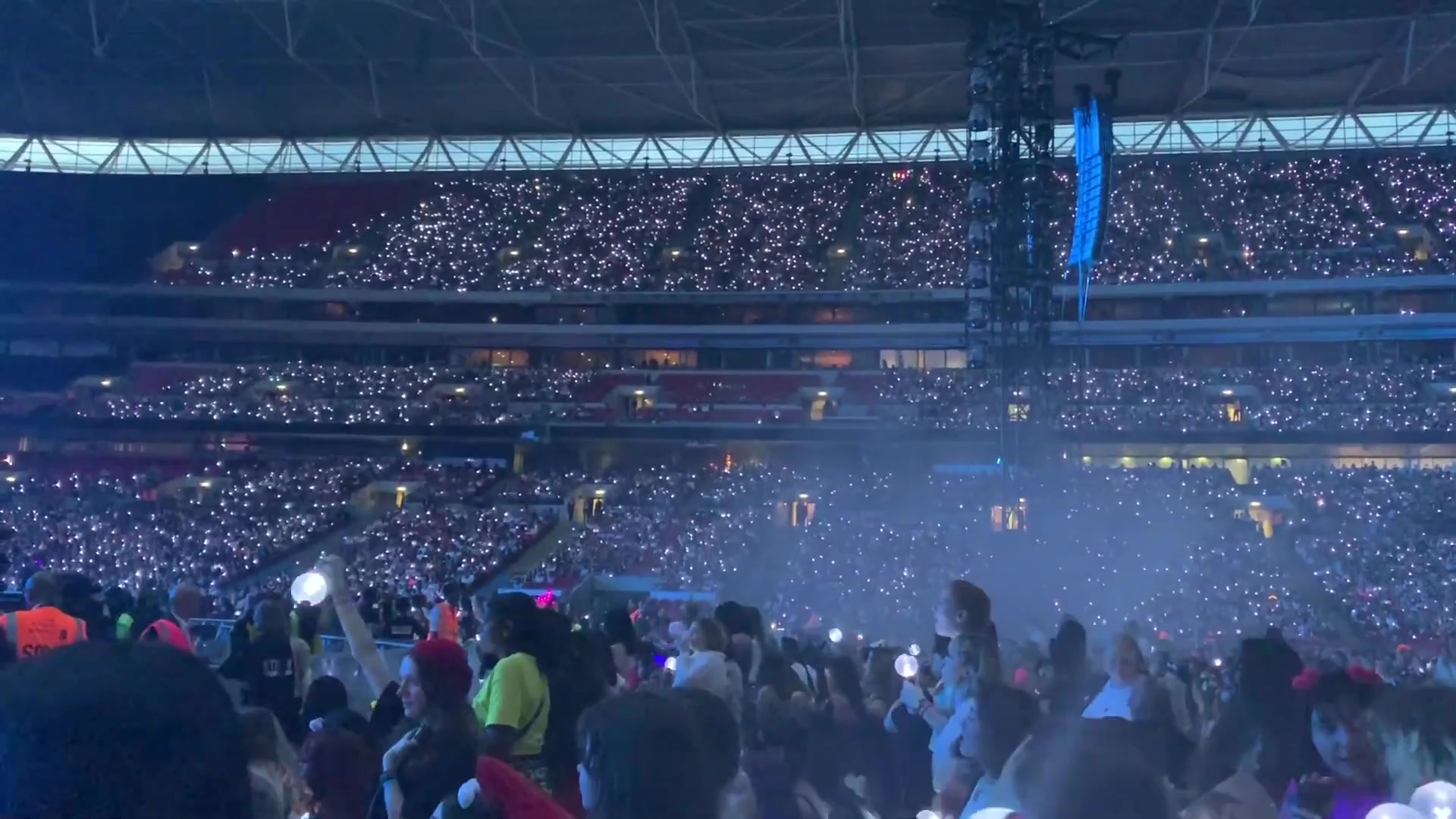
Before a major K-pop show begins, a city begins to change shape.
Airport arrivals thicken. Group chats turn into neighborhood guides. Restaurants that might otherwise have been invisible to a visitor acquire a second life as meeting points, photo stops and small rituals of anticipation. The arena is still the destination, but it is no longer the whole event. The event now lives in the walk between the hotel and the subway, in the queue for a late dinner, and in the improvised economies that form around a shared attachment to an artist.
That is the most useful way to read the return of BTS to the global touring circuit: not simply as a story about scale, but as a story about what scale does when it moves. According to Marketplace, the 2026 tour was reported to include 85 shows across 35 cities, with tickets sold out at the time of reporting. The same report cited an estimated USD 340 million in economic impact from four Las Vegas dates and an estimate of USD 5.3 billion in global economic benefit across the wider tour. Those are estimates, not a final ledger. But they point to a larger transformation: fandom has become an itinerant form of urban participation.
The Audience Is Also a Visitor
For decades, live music economics was measured most easily at the gate. How many tickets were sold? What was the gross? Which venue was filled? Those questions still matter. Yet they miss the most interesting part of a contemporary K-pop trip: a fan often arrives with an itinerary, a social network and an appetite for the place itself.
That distinction matters because K-pop fandom is unusually good at making a destination legible to itself. Fans circulate neighborhood recommendations before they arrive. They map public transit, share accessibility advice, organize charity projects, locate pop-ups and document the experience in real time. In effect, they build a temporary visitor-information layer around a concert weekend—one made by participants rather than a tourism office.
For a city, this is not an argument for treating culture as a cash register. It is an argument for taking hospitality seriously. A fan who feels welcomed will not remember only the set list. They will remember whether the station signage made sense, whether a night bus felt safe, whether local businesses could communicate, and whether there was somewhere to linger without being pressured to leave.
From Merchandise to Micro-Economies
The tour economy is distributed. Official merchandise remains central, but it is not the only transaction. Independent cafés create themed menus. Small retailers stock event-adjacent goods. Local photographers, translators, ride services and print shops acquire work. In the Marketplace account, fans described purchases that extended well beyond the ticket, from travel and accommodation to merchandise and informal, locally organized exchanges.
There is an important cultural point here. Much of this activity is not produced by a company and does not behave like conventional advertising. It is peer-to-peer recommendation: a gift economy with commercial edges. Fans exchange practical knowledge because they want the group experience to work. The result can be a more resilient local spending pattern than the usual one-night crowd, because the visitor is encouraged to explore before and after the show.
What Seoul Can Learn From Its Own Export
Seoul helped build the industrial and symbolic conditions that made K-pop globally mobile. But the next lesson is not merely how to host more spectacular events at home. It is how to think of cultural audiences as people who move through places, make meaning in them and return with stories.
That calls for a modest but meaningful civic infrastructure: clear multilingual information, reliable transit coordination, support for small businesses near venues, public-space management that protects both residents and visitors, and official communication that does not flatten fans into consumers. The best outcome is not a city branded around a single act. It is a city that becomes easier to enter, understand and enjoy because it has learned to receive a cultural public.
The Real Value of a Tour
The economic estimates around BTS are striking because they give institutions a language they already recognize. But the more durable value may be elsewhere. Fans turn attendance into memory work. They make maps, archive moments, recommend places and introduce one another to cities they might never otherwise have visited.
That is why a global K-pop tour should be understood as a form of cultural infrastructure. It does not replace local culture; it gives local culture a sudden, attentive audience. The cities that benefit most will be the ones that understand the difference between extracting spending and earning a return visit.
Sources & Notes
Marketplace, “Understanding the economic impact of BTS — and its ARMY of fans,” 1 September 2026. Economic impact figures in this article are cited as estimates reported by Marketplace and its sources.