Where Seoul Stops Performing and Starts Breathing
In a city that often presents itself through polished surfaces — glass towers, immaculate cafés, K-beauty flagships, and immaculate subway choreography — Supsok Hanbang Land (숲속 한방랜드) offers something rarer: a version of Seoul that still sweats, smolders, and remembers. Tucked into the wooded slope near Sinchon (신촌) and Bongwonsa-gil (봉원사길) in Seodaemun-gu (서대문구), it is not a sleek contemporary spa but a traditional jjimjilbang (찜질방) built around charcoal-heated kiln rooms, a more elemental descendant of Korea's older hanjeungmak (한증막) culture.
Official tourism sources describe it as one of the unusual places in Seoul where visitors can still experience a traditional charcoal kiln atmosphere rather than a fully modernized wellness complex. That distinction matters. Many spas promise relaxation; this one offers initiation.
A Furnace, a Ritual, a Memory of Korea
The experience at Supsok Hanbang Land is built around heat in gradations. Official and travel sources note that the site includes multiple kiln rooms of varying temperatures, allowing guests to move progressively from milder heat to much more intense chambers. The hottest room is often referred to in visitor descriptions as "Kkotttangbang" (꽃땅방), a room so hot that socks are widely recommended, and in some guides gloves as well.
This is not a passive spa itinerary. It is closer to a choreography. One warms the body gradually, exits, cools down, returns, and learns by sensation rather than signage. Alongside the kilns are the expected pillars of Korean bathhouse culture: gender-separated bath areas, communal resting spaces, and the understated social rhythm of people napping, talking softly, or simply lying on heated floors with the calm gravity of those who know there is nowhere else they need to be.
These features are precisely why the place resonates with international visitors: it functions as an introduction to Korean bath culture (한국식 목욕 문화) not as spectacle, but as ordinary life.
One of the most memorable details is the food. Several descriptions and visitor accounts mention the pleasure of roasting simple snacks — sweet potatoes, rice cakes, or eggs — over the charcoal fire near the kiln area. It is a modest ritual, but an eloquent one. In an age of algorithmic travel, where experiences are often curated for the camera before they are felt by the body, this is refreshingly analog.
How to Go — and Why the Slight Inconvenience Is the Point
Location: 75-7 Bongwonsa-gil, Seodaemun-gu, Seoul (서울 서대문구 봉원사길 75-7)
Operating Hours:
- General facility: 06:30–22:00
- Kiln rooms: 08:00–21:00
Admission: Approximately 15,000–17,000 won (confirm before visiting)
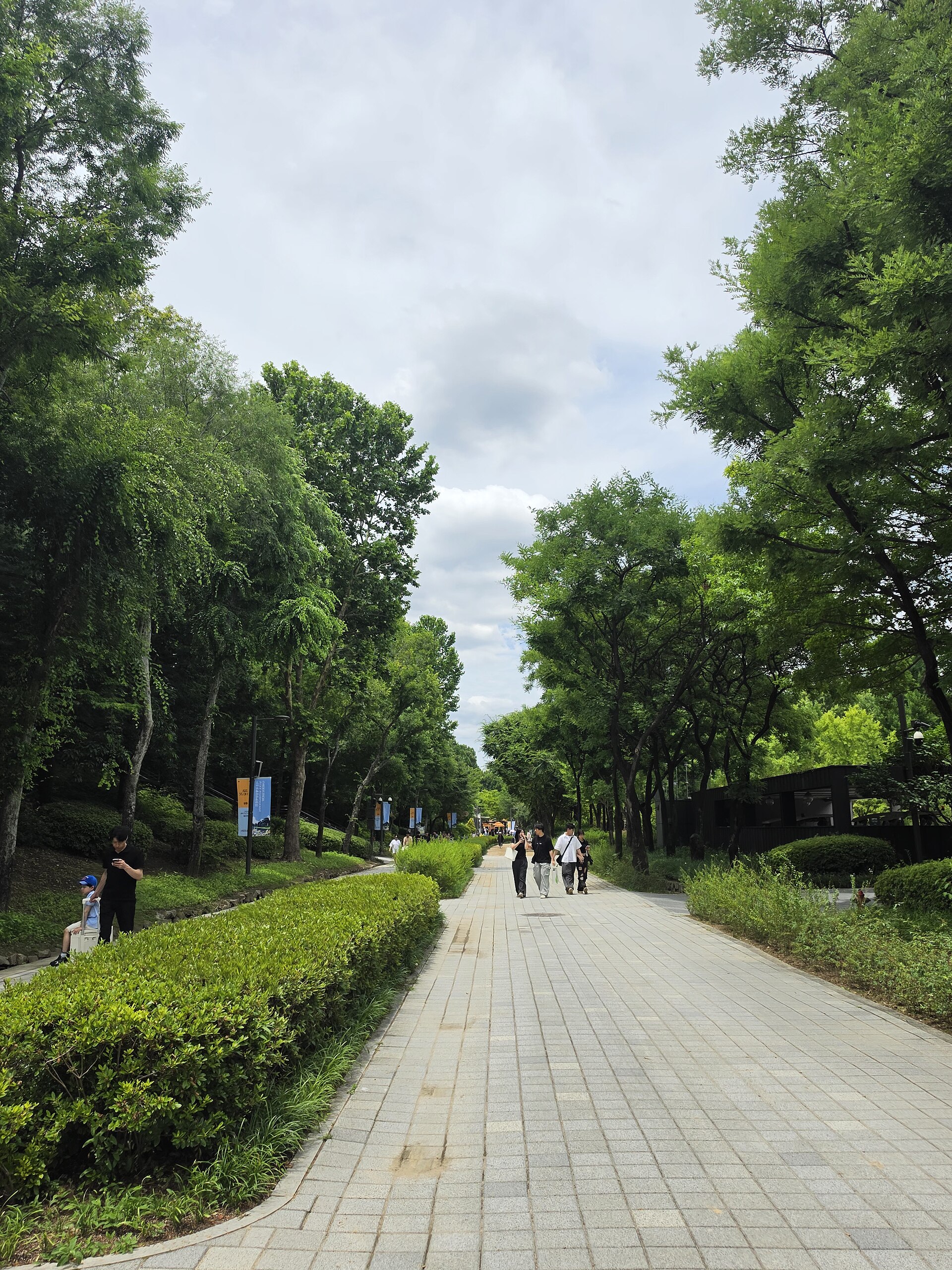
The most practical route for foreign visitors begins at Sinchon Station (신촌역) on Seoul Subway Line 2. From there, travel sources commonly recommend either a short taxi ride or a bus connection followed by a walk uphill toward Bongwonsa Temple (봉원사). This last stretch matters. Supsok Hanbang Land is not the kind of place that materializes the second you emerge from the subway. You approach it. You ascend into it. The slight inconvenience is part of the transition — a movement away from the speed of central Seoul and into a slower, older register of experience.
Practical Tips for First-Time Visitors
- Start with lower-temperature kiln rooms before attempting the hottest chamber
- Bring or wear socks if you intend to try the high-heat rooms
- Arrive with expectations of atmosphere and tradition, not luxury spa aesthetics
- Best for: Travelers curious about traditional Korean sauna culture, couples or friends seeking unusual restorative outings, and visitors who prefer places with memory over places with branding
In that sense, Supsok Hanbang Land offers something increasingly difficult to find in major cities: not just leisure, but a different tempo of being. It is one of those places that reminds you that travel is not only about seeing a city's landmarks. Sometimes it is about entering its habits.
Location Map
Search in Google Maps:
- English: Supsok Hanbang Land
- Korean: 숲속한방랜드