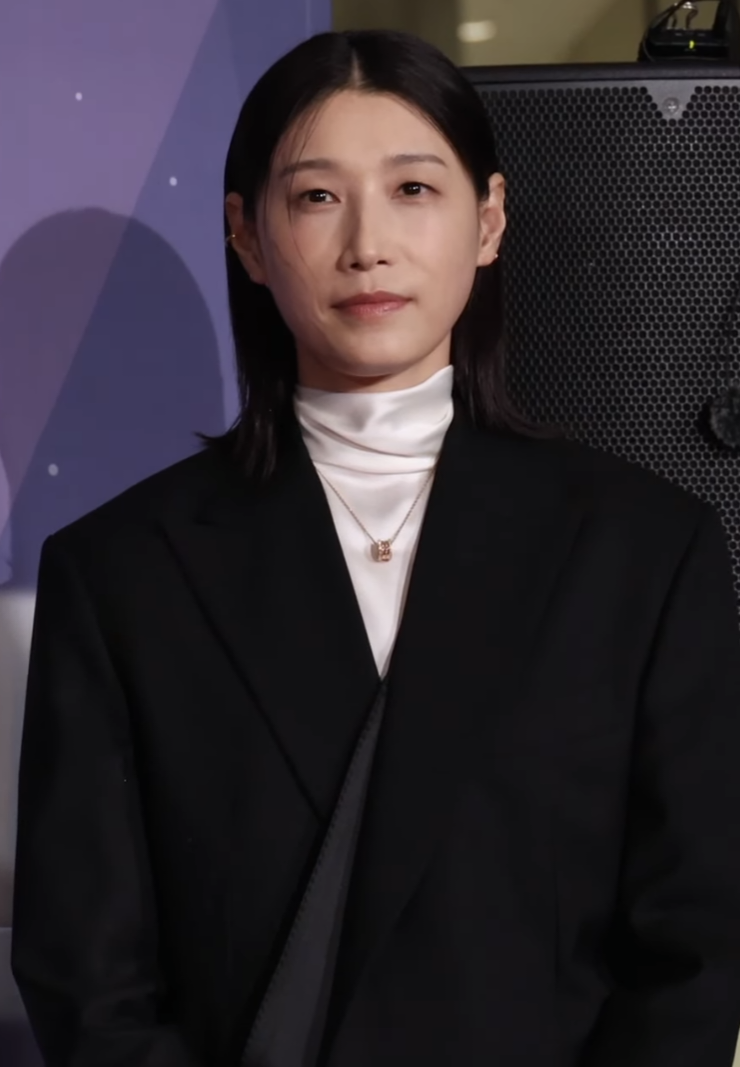
Lee Ga-gyeong wants enough money to leave for America. Instead, the pickpocket enters the Japanese Government-General of Joseon disguised as an interpreter trainee. The route into danger is not a secret tunnel but a job that lets her hear what power says. That is the distinctive premise of tvN’s 100 Days of Deception, the official English title used by Netflix. With five cast members in the latest RACOI TV drama top ten, its wider ensemble deserves attention alongside the central romance.
Five names, one drama
For November 16–22, 2026, RACOI’s TV drama cast ranking places Kim Yoo-jung third with 4,142 mentions and Park Jin-young fourth with 3,918. Jin Sun-kyu is sixth with 2,876, Kim Hyun-joo seventh with 2,617 and Lee Moo-saeng ninth with 2,139. The pattern is broader than a leading couple: three other performers from the same production also occupy the top ten.
This is a measure of recorded attention, not a vote of confidence. RACOI’s guide distinguishes media buzz from viewer buzz across news, videos, posts, comments and video views. Mentions do not identify unique people or favorable sentiment. These are TV drama rankings, not the combined TV-and-OTT chart, audience ratings or an American popularity measure. They establish the ensemble’s visibility that week; they cannot explain which scenes or motives produced it.
Gyeongseong is not just period décor
CJ ENM’s official synopsis locates the story in 1930s Gyeongseong, colonial-era Seoul. For international viewers, the Government-General needs more explanation than the costumes. The Seoul Museum of History describes it as an institution with sweeping administrative, military, legislative and judicial authority after Japan’s 1910 annexation of Korea. Its account also stresses institutionalized ethnic discrimination and unequal urban development.
That context changes the meaning of an undercover office romance. Ga-gyeong is entering the institution that governs her society, not simply an employer with an inconvenient rule against dating. The museum’s account does not certify the drama’s fictional events as history. It explains why this setting makes access, trust and betrayal politically consequential before the romantic complications begin.
Language puts the romance inside power
The interpreter setup makes those pressures unusually concrete. Yonhap’s casting report identifies Park Jin-young’s Kim Tae-ung as an elite interpreter fluent in three languages and the adopted son of senior colonial official Sato Shinichi. Ga-gyeong, played by Kim Yoo-jung, enters as a trainee under a false identity. The character is also known as Sato Hideo, as Parade’s account explains.
Both characters work around language, but they do not begin with equivalent security. One has an elite post and a family connection to authority; the other is a pickpocket using concealment to obtain access. As a dramatic design, this places intimacy inside an unequal relationship to the institution. The question is not merely whether lovers tell each other the truth. It is what telling the truth could cost each of them.
A bargain reaches beyond the couple
The other ranked actors give that question several directions. Yonhap identifies Jin Sun-kyu’s Sato Shinichi as an ambitious colonial official. Kim Hyun-joo plays Yoo So-ran, a sniper who proposes a dangerous deal to Ga-gyeong while pursuing revenge against him. Lee Moo-saeng plays Yoo Philip, an American newspaper correspondent who also belongs to the resistance group Gugukdan.
These roles connect the love story to authority, revenge and resistance. Ga-gyeong’s original wish to leave for America is particularly important: personal escape is not automatically the same goal as national liberation. CJ ENM describes her bargain with independence fighters and a hundred-day mission. That arrangement supplies conflicting obligations beyond the couple. The RACOI positions do not prove audiences prefer political intrigue, but they make it reductive to describe this week’s attention as chemistry between two stars alone.
What the poster promises overseas
The official promotional poster makes a related choice. Ga-gyeong’s face is sharply visible as she looks back, while men in dark hats and uniforms blur around her. Its composition puts an individual woman inside a crowded institutional world. This is marketing, not evidence of a scene’s execution, but it presents exposure and concealment rather than a romantic embrace.
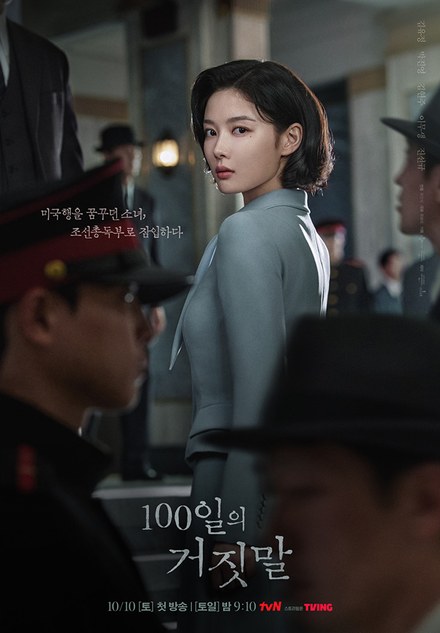
The series began on October 10, according to RACOI’s program record, and tvN lists Saturday–Sunday broadcasts. Netflix’s official US and Singapore listings provide an overseas route to the story, not evidence of overseas enthusiasm. For viewers arriving through streaming, the most useful introduction is the interpreter’s desk: a place where a romance can begin because language grants access, and where that access is dangerous because colonial power remains unequal.
Sources & Notes
RACOI TV drama cast ranking, November 16–22, 2026, and guide; CJ ENM synopsis and poster; Yonhap via Nate, March 6; Parade, October 11, corroborating US distribution; Seoul Museum of History and official Netflix listings linked above. Assessment as of November 26, 2026. Premise and promotional analysis, not an episode review. Poster rights remain reserved; no open license is asserted. 인터넷반응 출연자 순위 — TV 드라마, November 16–22, 2026. RACOI 이용가이드.