When Korea Asked Labor and Management to Become "One Mind"
A 1984 Public Service Advertisement, the Politics of Harmony, and a Korean Lesson Hidden in an Old Broadcast
There is a cart. There is a worker pushing it. There is an employer pulling it. But the cart does not move properly, because the two men do not cooperate. The narrator, Shin Dong-woo, looks at the viewer and asks a question that sounds almost childlike in its simplicity: How can anything go right if people quarrel?
This was the moral architecture of a 1984 Korean public service advertisement titled "One Mind" (한 마음). Produced by Hanil Promotion and archived by KOBACO under the category of economy and industry, the advertisement belonged to the subcategory of labor-management harmony (노사 화합). Its central message was clear: when workers and employers act with "one mind and one will" (한마음 한뜻), the factory runs, productivity rises, exports grow, and the household economy improves.
It was a short advertisement, but it carried the weight of a national development philosophy. The factory was not merely a factory. It was the nation. The cart was not merely a cart. It was the Korean economy. The worker and the employer were not presented as social actors with different interests. They were moral figures in a story about unity, discipline, production and collective ascent.
Four decades later, the advertisement is worth revisiting not because it is nostalgic, but because it reveals how Korea once spoke to itself about work, growth and conflict. In 1984, the public message was: become one. In today's Korea, the more difficult question is: under what conditions can people fairly work together?
The Factory as the Nation's Stage
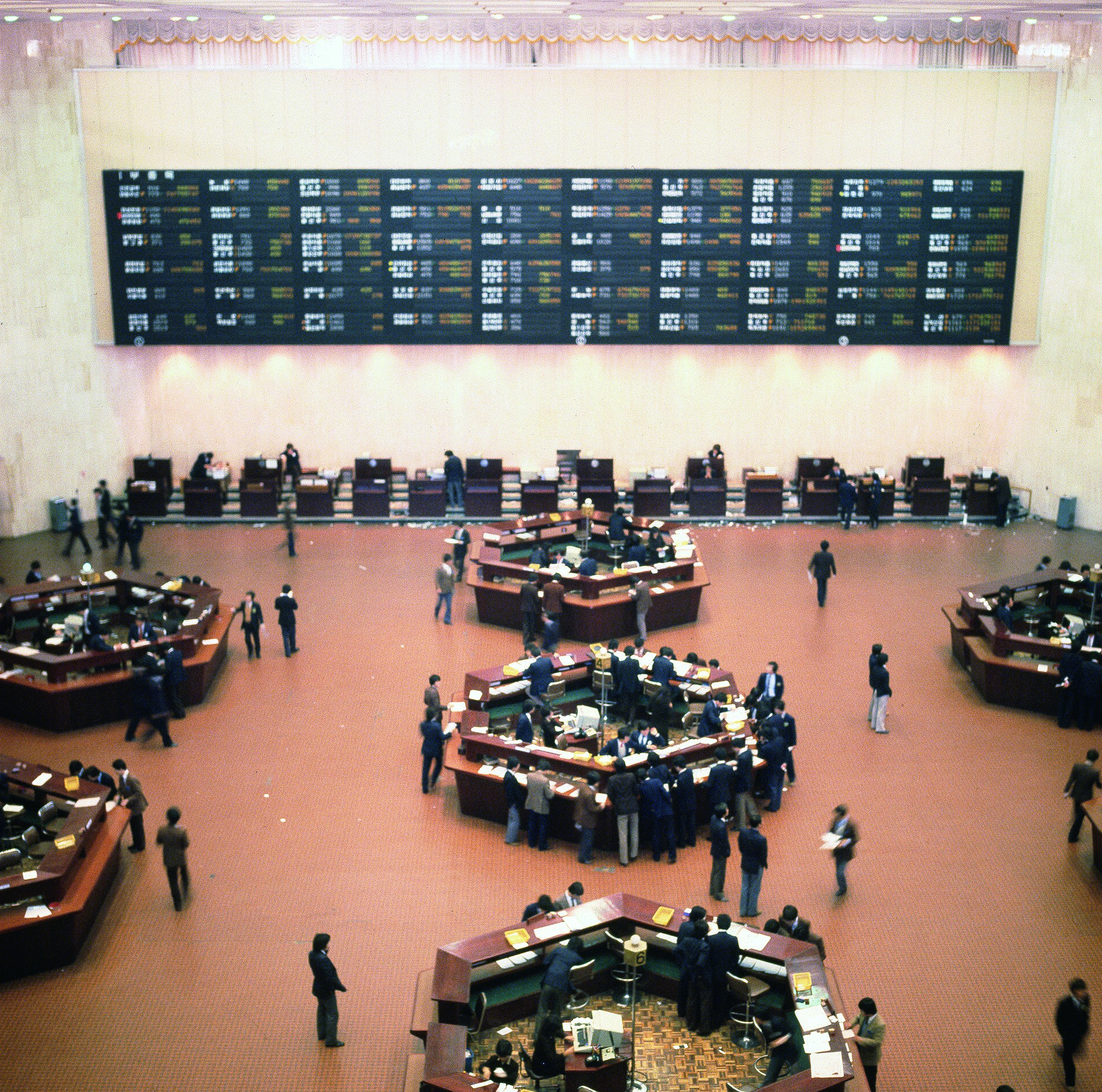
The 1984 advertisement emerged from a Korea still governed by the grammar of the developmental state (발전국가). The country was industrializing quickly, exporting aggressively and preparing to present itself to the world through the 1986 Asian Games and the 1988 Seoul Olympics. Historical economic data place South Korea's 1984 real GDP growth at roughly double-digit levels, a sign of the rapid expansion that defined the period.
The advertisement's script turns that economic worldview into a simple chain of consequences. If labor and management fail to cooperate, "the factory stops, exports fall, and prices rise." If they help one another, "the workplace atmosphere becomes brighter, productivity rises, and even a steep hill can be climbed." The language is plain, almost pedagogical. It is designed not to invite debate but to produce immediate social agreement.
That is precisely what makes the advertisement historically revealing. It does not discuss wages. It does not mention workplace safety. It does not address bargaining rights, inequality, industrial hierarchy or labor representation. Instead, it converts structural conflict into a problem of attitude. Labor conflict becomes insufficient harmony. Economic uncertainty becomes a matter of not sharing the same heart.
The key Korean expression is "one mind, one will" (한마음 한뜻). In ordinary Korean, the phrase is warm and communal. It suggests solidarity, intimacy and shared purpose. Families can be of one mind. Communities can be of one mind. A nation can be called upon to become one mind in moments of crisis.
But in the context of labor relations, the phrase becomes more complicated. It asks people in unequal institutional positions to imagine themselves as emotionally equal. The worker and the employer may stand beside the same cart, but the advertisement never asks who owns the cart, who sets its direction, who bears the burden of pushing, and who receives the larger share when it finally reaches the top of the hill.
Harmony as Public Communication
Public service advertising is never only about behavior. It is also about social order. It tells citizens what kind of problem the nation believes it has.
In the 1984 advertisement, Korea's problem is not injustice, exclusion or institutional imbalance. The problem is disunity. The solution is not negotiation, reform or redistribution. The solution is harmony. The advertisement therefore performs a subtle but powerful act of translation: it translates labor conflict into a moral failure and economic growth into a shared civic duty.
This was not unusual for the period. Public communication in high-growth Korea often linked personal conduct to national destiny. Saving, working hard, obeying rules, exporting goods, reducing waste and cooperating in the workplace could all be framed as acts of patriotism. In this sense, the public service advertisement functioned as a civic classroom. It taught viewers how to feel about the economy.
The emotional tone matters. The commercial is not angry. It does not threaten. It reassures. It uses a familiar narrator, a simple workplace scene and a metaphor anyone can understand. The cart can move if both sides cooperate. The hill can be climbed if the two men share a purpose. The company can prosper, and the household economy (집안살림) can improve.
That final move is especially important. The advertisement links the factory directly to the family. It suggests that national productivity and domestic livelihood are part of the same moral economy. The workplace is not outside the home; it is the foundation of the home. The prosperity of the company becomes the condition for the stability of family life.
This was the persuasive genius of the advertisement. It made labor harmony feel intimate. It brought the national economy into the household. It made the abstract language of exports and productivity feel like a matter of rice, rent, children and family survival.
What Has Changed in Korea Since "One Mind"
Contemporary South Korea is far richer, freer and more globally visible than the Korea of 1984. It is a democracy, a technology power, a semiconductor giant and a cultural exporter. Yet the old promise that national growth would naturally translate into shared security has become harder to sustain.
Recent economic forecasts show a country still capable of recovery, especially through semiconductors and exports. The Bank of Korea projected GDP growth of 1.0 percent for 2025 and 1.8 percent for 2026 in its November 2025 outlook, while KDI projected around 1.8 percent growth for 2026, supported by semiconductor exports and a recovery in domestic demand.
But the social experience of growth is uneven. In August 2025, South Korea had 8.568 million non-regular workers, accounting for 38.2 percent of all wage workers. That figure matters because it points to a labor market where employment status, security, wages and benefits are sharply differentiated.
The OECD has also warned that Korea faces severe structural pressures: population decline, labor market dualism, high housing and education costs, weak financial conditions for young adults, and the widest gender wage gap among OECD countries. These are not problems that can be solved by a slogan of harmony alone.
This is why the old phrase labor-management harmony (노사 화합) sounds different today. Harmony remains desirable. No society can live in permanent conflict. But harmony without fairness (공정) can sound like obedience. Harmony without voice can sound like silence. Harmony without institutional trust can become a beautiful word placed over unresolved grievances.
The worker in the 1984 advertisement wore the symbolic clothing of the industrial age. Today's worker may be a semiconductor engineer, a delivery platform rider, a subcontracted technician, a hospital nurse, a call-center employee, a content producer, a migrant worker, an older person returning to the labor market or a young professional living with career precarity. The employer, too, is no longer a single figure in a suit. It may be a conglomerate, a platform, a contractor, a public institution, a franchise system or an algorithmic management structure.
The cart has changed. The hill has changed. The people pushing it have multiplied.
From "One Mind" to Fair Cooperation
If a public service advertisement on labor were made today, it could not simply repeat the 1984 message. It would need a different moral language.
It might still speak of cooperation (협력). But cooperation today must be built on credible rules, transparent bargaining, fair compensation, workplace safety, career mobility and recognition of unequal bargaining power. It would need to show not only people pulling together, but also the process by which they decide what "together" means.
A contemporary version of the 1984 advertisement might say:
Harmony is not silence. It begins with fairness. Cooperation is not obedience. It begins with trust. Growth is not only output. It is the ability to share risk and reward.
That would be a very different public message from the original. The 1984 advertisement asked workers and employers to align emotionally. A modern public campaign would need to ask institutions to become trustworthy. The older ad assumed that shared purpose would produce social order. A modern ad must recognize that social order depends on whether people believe the terms of cooperation are legitimate.
This is not a rejection of the old advertisement. It is a historical reading of it. "One Mind" captured something real about Korea's industrial era: the urgency of growth, the fear of instability, the moral pressure of national development and the belief that the workplace was the engine of collective survival.
But it also reveals the limitations of that era's public language. It treated conflict as a disturbance rather than as information. In a democratic society, conflict is not always a problem to be erased. Sometimes it is the way hidden costs become visible.
That is the deeper contemporary lesson. A society does not become strong because everyone says the same thing. It becomes strong when people who disagree can still trust the rules of cooperation.
Why This Advertisement Still Matters
The 1984 advertisement matters because it is a small archive of Korean modernity. In less than a minute, it compresses the anxieties of a high-growth nation: factories, exports, inflation, productivity, household stability and social discipline. It shows how public advertising can turn economic policy into everyday morality.
It also shows why old public service advertisements are valuable cultural documents. They do not merely tell people what to do. They show what a society feared, what it valued and what it wanted citizens to become.
In 1984, Korea wanted citizens who would work together for growth. In 2026, Korea needs citizens and institutions capable of building fair cooperation (공정한 협력). That is a subtler, harder and more democratic ambition.
The old advertisement said: if we share one mind, the hill becomes easier to climb.
Today, Korea might answer: yes, but first we must ask who carries the weight, who chooses the road, and who benefits when the cart reaches the top.
Learning Korean Through Public Service Advertising
There is one more reason to return to "One Mind": it is an excellent text for learning Korean. Public service advertisements use compact, memorable and culturally dense language. They teach not only vocabulary, but also how Korean society organizes ideas of duty, work, family and nation.
The script of this advertisement is especially useful because it contains workplace vocabulary, rhetorical questions and cause-and-effect grammar in simple form.
| Korean term | Meaning | Why it matters |
|---|---|---|
| 한 마음 | one mind; shared heart | A key phrase for unity and collective purpose. |
| 한마음 한뜻 | one mind, one will | A stronger expression of complete solidarity. |
| 근로자 | worker | A formal policy word for laborer or employee. |
| 경영주 | employer; business owner | A word tied to management and ownership. |
| 노사간 | between labor and management | A compact term for labor-management relations. |
| 직장분위기 | workplace atmosphere | Shows the Korean emphasis on social climate at work. |
| 생산성 | productivity | A central word in Korea's industrialization discourse. |
| 수출 | exports | A keyword of Korea's developmental economy. |
| 집안살림 | household economy | Connects national growth to family livelihood. |
| 공정 | fairness | A key contemporary Korean word in debates about work and society. |
| 상생 | mutual prosperity | A modern term often used in corporate, policy and social contexts. |
One useful sentence pattern from the advertisement is "-다면", meaning "if." In the phrase "서로 돕는다면", the grammar creates a conditional logic: if people help one another, positive outcomes follow. Another useful ending is "-고", which connects a sequence of results: productivity rises, the workplace atmosphere improves, and the hill becomes easier to climb.
For global viewers, this is the real value of learning Korean through public service advertising. A word like 한 마음 is not just vocabulary. It is a window into Korea's industrial memory. A word like 공정 is not just a dictionary term. It is part of the language through which contemporary Korea debates justice, work and trust.
In that sense, the 1984 advertisement teaches two lessons at once. It teaches the Korean language. And it teaches the social history carried inside that language.
The final line for a global audience might therefore be simple:
In 1984, Korea taught harmony (화합). Today, Korea asks about fairness (공정). And through one old public service advertisement, we can learn both Korean words and Korean society.