The First Sip Is Fame. The Second Is Quality
Matsuda Beer and the Hard Truth of Personality-IP (인물 IP) Branding
There was a time when beer asked to be judged in elemental terms: bitterness, finish, price, coldness, availability. Today, that is rarely enough. Products increasingly arrive wrapped in narrative (서사), persona (페르소나), and what marketers like to call world-building (세계관). Consumers do not simply buy the object. They buy the symbolic frame around it—the face they recognize, the mood they trust, the social meaning they can borrow.
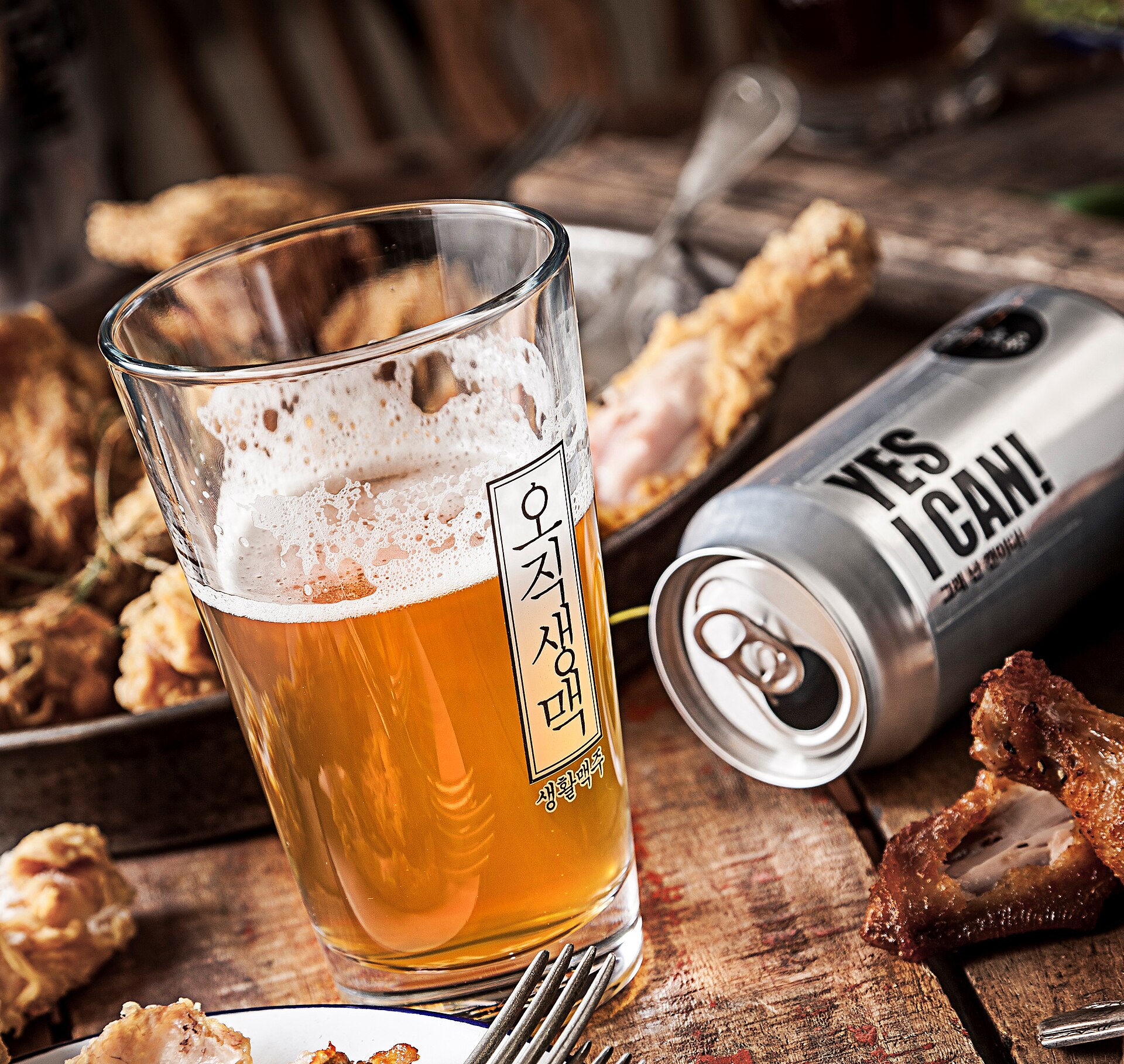
Matsuda Beer, launched in South Korea through CU in March 2026, belongs squarely to that newer economy of consumption, where the product on the shelf is inseparable from the personality (인물) that introduces it. According to BGF Retail, the beer was positioned with Japanese-style lager cues, Koshihikari rice, and launch mechanics that included limited-edition glassware and fan-facing promotions. It entered the market not as a quiet beverage, but as a pre-narrated event.
That distinction matters. Matsuda Beer is not most interesting as a beer alone. It is more interesting as a branding structure (브랜딩 구조). It did not arrive carrying the weight of a century-old brewery myth or an artisanal founder narrative. It arrived carrying a person. Publicly available materials indicate that the beer is tied to Matsuda Bucho, a Japanese creator persona already familiar to many Korean consumers. In brand terms, that means the product did not begin with taste. It began with recognition (인지). The consumer encountered the can having already encountered the character. In modern consumer markets, that is an enormous advantage. Familiarity reduces friction. A known face shortens explanation. A trusted persona can convert curiosity into trial far more efficiently than a new beverage brand starting from zero.
This is the first lesson of personality-IP branding. Fame is not merely attention (주목). It is pre-loaded meaning. The person functions as a bridge between unfamiliar product and willing consumer. That is precisely why creator-led commerce has become so powerful across categories from cosmetics to beverages. The great seduction of this model is that it appears to solve the hardest problem in brand building: the cost of entry. It offers instant salience (현저성), immediate cultural context, and a ready-made emotional vocabulary. Matsuda Beer, in that sense, was not sold only as liquid. It was sold as a culturally legible extension of a familiar media figure.
Recognition (인지) Gets You Into the Basket. Product Value (제품 가치) Gets You Back
And yet the central problem of personality-IP branding begins exactly where its initial strength ends. Recognition can generate trial purchase (시도 구매). It cannot guarantee repeat purchase (반복 구매). That is the law many creator brands learn too late. A person can persuade consumers to pick something up once. Only the product can persuade them to pick it up again.
Publicly available evaluation signals around Matsuda Beer suggest that this transition—from symbolic appeal to sensory judgment—is now the real test. Untappd lists Matsuda Beer as a Japanese rice lager from Daily Brewing | Saenghwal Maekju, with 5% ABV and a rating that reads as respectable but not transformative. The market signal here is subtle but important: there is little evidence of rejection, but neither is there clear evidence of breakout product distinction (차별성).
That middle zone—acceptable, pleasant, serviceable—is often more revealing than outright failure. Markets do not only kill products through scandal. They also neutralize them through replaceability (대체 가능성). A beverage that is "good enough" may survive its launch. But surviving a launch and becoming a habit are entirely different achievements. This is where branding theory must resist its own temptation. Too many marketers mistake attention for asset (자산), and buzz for brand equity (브랜드 자산). Yet attention is only the opening condition. Brand equity begins much later, when consumers no longer need the personality to justify the purchase. The strongest brands may begin with borrowed trust, but they do not remain dependent on it.
From a brand-critical perspective, then, Matsuda Beer is valuable precisely because it sits in this unresolved space. It appears to have succeeded in launch translation (출시 번역): turning a personality into an occasion, and an occasion into a retail event. But the deeper question is whether it can make the harder conversion—from fan attention (팬덤 주목) to product loyalty (제품 충성도). That is the inflection point at which personality branding either matures into a durable business or reveals itself as a well-staged introduction with no lasting second act.
The Real Divide Is Not Success Versus Failure. It Is Conversion (전환) Versus Leakage (이탈)
The clearest way to understand Matsuda Beer is to place it within the broader landscape of personality-led brands. Consider Kylie Cosmetics. Coty announced in 2019 that it would acquire a 51 percent stake in Kylie Jenner's beauty business, a sign that the brand had become more than celebrity merchandise. What made it consequential was not merely Kylie Jenner's fame, but the coherence (정합성) between founder image, product category, and digital distribution. The persona fit the product. The product fit the audience. And the audience was already trained to convert identity performance into purchase behavior. This is what successful personality-IP branding looks like at scale: not visibility alone, but category fit (카테고리 적합성), operationalization (운영화), and repeatable retail logic.
PRIME offers a similar lesson from the beverage sector. Circana's reporting on new-product performance showed PRIME among the leading food and beverage launches of 2023. Again, the point is not that internet fame magically creates enduring brands. It does not. The point is that fame, when converted through the right product architecture (제품 구조), timing, and distribution, can dramatically accelerate market entry. Successful personality-IP brands are rarely successful because people love the person in abstraction. They succeed because that affection is translated into a product form that consumers can incorporate into ordinary life. Attention becomes habit. Story becomes routine. Identity becomes shelf velocity.
The failures are equally instructive, perhaps more so. When MrBeast Burger unraveled into legal dispute and public criticism, the central issue was not fame deficiency but operational inconsistency (운영 불일치). Scale had outpaced control. The creator's name amplified the launch, but it also amplified disappointment when product experience failed to meet expectation. This is the paradox of personality brands: the same emotional proximity that lowers entry barriers also intensifies backlash. In such cases, the brand does not merely suffer product complaints. It suffers moral disappointment. The consumer no longer feels only that the burger was bad. The consumer feels that the person behind it should have known better.
This is why Matsuda Beer deserves to be read carefully, not casually. It is not simply a quirky Korean beer launch involving a familiar Japanese media figure. It is a miniature case study in contemporary branding logic. It shows how parasocial familiarity (준사회적 친밀감), cultural translation (문화 번역), and retail accessibility can combine to generate rapid market entry. But it also reveals the hard limit of that formula. The first purchase can be made by affection, novelty, or symbolic proximity. The second purchase must be made by product conviction (제품 확신). If a brand cannot cross that threshold, then personality functions only as ignition, not as infrastructure.
For executives, that may be the most useful conclusion of all. The contemporary brand is no longer built by manufacturing excellence alone. It is built through media logic (미디어 논리), emotional transfer (감정 전이), community formation (커뮤니티 형성), and identity scaffolding (정체성 비계). But none of those can permanently excuse mediocrity. The market is, in the end, unsentimental. It will permit a famous first sip. It will not subsidize an ordinary second one. Matsuda Beer may yet become more than a personality-led launch. But to do so, it will have to accomplish what every creator brand eventually must: separate trial from loyalty, and transform recognition into enduring brand value.
References
BGF Retail. (2026). BGF Retail official site. https://www.bgfretail.com/eng/
Circana. (2024, June 4). 2024 new product pacesetters report. https://www.circana.com/post/2024-new-product-pacesetters-report
Circana. (2024, June 6). Circana's new product pacesetters report reveals 2023 innovation meets consumers in new moments. https://www.circana.com/post/circana-s-new-product-pacesetters-report-reveals-2023-innovation-meets-consumers-in-new-moments
Coty Inc. (2019, November 18). Coty and Kylie Jenner announce strategic partnership to expand beauty brands globally. https://investors.coty.com/news-events-and-presentations/news/news-details/2019/Coty-and-Kylie-Jenner-Announce-Strategic-Partnership-to-Expand-Beauty-Brands-Globally/default.aspx
Coty Inc. (2020, January 5). Coty and Kylie Jenner commence strategic partnership. https://www.coty.com/news/coty-and-kylie-jenner-commence-strategic-partnership
Coty Inc. (2021, July 1). Coty announces relaunch of Kylie Cosmetics with new and improved clean and vegan formulas. https://www.coty.com/news/coty-announces-relaunch-kylie-cosmetics-new-and-improved-clean-and-vegan
Untappd. (2026). Daily Brewing | 생활맥주 — brewery profile. https://untappd.com/w/daily-brewing/523855
Untappd. (2026). Matsuda Beer | 마츠다비어 — Daily Brewing | 생활맥주. https://untappd.com/b/daily-brewing-matsuda-beer/6654499
The Washington Post. (2023, August 8). MrBeast sued by ghost kitchen after criticizing his own burger brand. https://www.washingtonpost.com/food/2023/08/08/mrbeast-burger-lawsuit-virtual-dining-concepts/