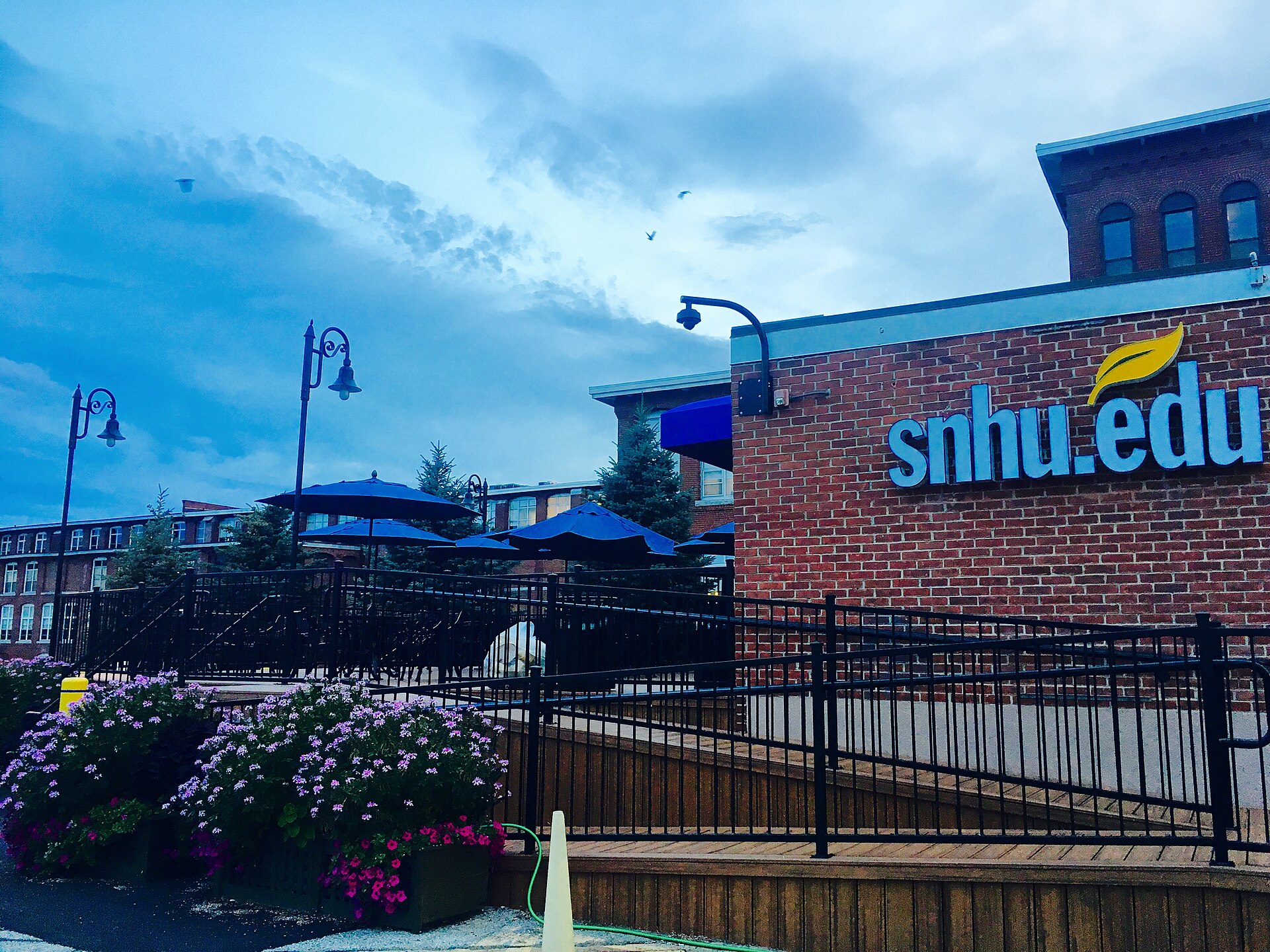
In the summer of 2003, Paul LeBlanc walked across the campus of Southern New Hampshire University (SNHU) for the first time as its new president. Manchester, New Hampshire. A quiet, faded mill town in the American Northeast, the kind of place that doesn't appear on anyone's radar. SNHU was a small private college of roughly 2,500 students — unknown nationally, financially precarious, and buried at the bottom of every ranking list that mattered.
What LeBlanc felt walking those grounds was not ambition. It was clarity. This institution, he understood immediately, could not survive doing what it was already doing.
That moment of recognition was the beginning of one of the most improbable turnaround stories in the history of American higher education.
A Son of Immigrants Who Learned to See from the Outside
Paul J. LeBlanc's biography reads like a quiet rebuke to the assumption that elite pedigree is a prerequisite for transformational leadership. He grew up in a working-class immigrant household, became the first in his family to attend college, and earned his degrees from institutions that no one would call prestigious: a bachelor's from Framingham State University, a master's from Boston College, a doctorate from the University of Massachusetts.
In an era when most American university presidents arrived via the Ivy League pipeline, LeBlanc came from somewhere else entirely. And that outsider vantage point — the ability to see systems from the margins rather than from their center — would prove to be his most durable asset.
Before arriving at SNHU, he had already demonstrated an unusual instinct for the intersection of technology and education. In 1993, he led a technology startup inside the publishing house Houghton Mifflin, just as the internet was beginning to reshape how information moved through the world. In 1996, at the age of thirty-six, he became president of Marlboro College in Vermont, where he launched one of the first e-commerce graduate programs in the United States. By the time he accepted the SNHU presidency, his conviction was settled: technology was not a supplement to education. It was a lever capable of redesigning it from the ground up.
The Seed Hidden in the Data
LeBlanc's first act at SNHU was not to commission a strategic plan or convene a faculty committee. He looked at the numbers. Financial reports. Enrollment data. Online program activity. And buried inside those figures, he found something small but decisive.
SNHU already had an online education program — a modest distance-learning operation launched in 1995 at the request of the U.S. Navy, designed to serve sailors stationed at remote bases. Eighteen staff members. A few hundred students. Negligible revenue. By most measures, it barely existed.
But LeBlanc saw a seed.
"We asked ourselves: what cards do we actually hold? We were unknown, we were regional, we were constrained. But that was also our freedom. We had no reputation left to protect."
The online education market in the early 2000s was being aggressively colonized by for-profit institutions, most notably the University of Phoenix. Traditional universities dismissed the entire sector as low-quality and beneath them. LeBlanc read the situation differently. The demand was real. The market was wide open. And no one was building a credible nonprofit alternative.
Two Miles Away: The Art of the Deliberate Separation
In 2005, LeBlanc made the move that would define his presidency. He physically relocated SNHU's online division — formally named the College of Online and Continuing Education — to a converted mill building two miles from the main campus, in Manchester's old textile district.
Two miles. The distance sounds trivial. The intent was radical.
He installed a single operating rule in the new space: no closed doors. Executives and staff alike worked behind glass walls. The architecture was a deliberate statement against the bureaucratic pathologies that had calcified inside traditional university administration — slow decision-making, risk aversion, institutional inertia, the reflexive protection of the status quo.
To the online team, his instructions were blunt: "Move like a company. Speed, data, customer service. But never compromise on quality." When a prospective student called, a real person answered within minutes. That sounds unremarkable until you consider that most universities of the era treated prospective students as supplicants rather than customers, routing them through phone trees and form letters.
The theoretical scaffolding for this approach came from LeBlanc's long friendship with Harvard Business School professor Clayton Christensen, the architect of disruptive innovation (파괴적 혁신) theory. The two men had first met in the early 1990s, playing basketball in a Boston church gymnasium — when Christensen was still an obscure ceramics company executive, years before The Innovator's Dilemma made him famous. SNHU became one of Christensen's favorite examples of disruptive innovation applied to higher education.
The main campus faculty and administration, predictably, tried to reassert control over the online division. LeBlanc's response was equally predictable: he blocked them. "My job," he said, "was to protect the online team from the mothership — to give them the space to build by their own rules." Shielding an innovation unit from the gravitational pull of the existing organization, he understood, was not a secondary management task. It was the primary one.
The Phone Call from Fast Company
In the spring of 2012, the editors of Fast Company magazine contacted SNHU with news that would have seemed hallucinatory a decade earlier. The university had been ranked 12th on the magazine's annual list of the World's 50 Most Innovative Companies — alongside Apple, Google, and Amazon. It was the first time in the list's history that a university had appeared.
By that point, SNHU's online enrollment had already surpassed tens of thousands of students. From a base of roughly 500 online learners in 2010, the program had grown explosively. Annual revenue had climbed from $109 million to $1.2 billion. The institution that had been invisible in 2003 was now, by at least one credible measure, among the most innovative organizations on earth.
Rethinking the Unit of Education Itself
At the height of SNHU's growth, LeBlanc turned his restlessness toward a more fundamental question. Online education, he had begun to suspect, was still just a copy-paste of the traditional model — the same credit hours, the same semester calendar, the same seat-time assumptions — delivered through a different medium. Was that really transformation? Or was it just migration?
In 2011, he quietly established an Innovation Lab inside SNHU, deliberately isolated from both the online division and the main campus. The team's mandate was stark: redesign the business model of higher education itself.
Two years later, the result emerged: College for America (CfA), the first competency-based education (CBE / 역량 기반 교육) degree program in U.S. history to receive simultaneous approval from the federal Department of Education and a regional accreditor. Backed by the Bill & Melinda Gates Foundation and the Lumina Foundation, CfA replaced the fundamental unit of education from time to demonstrated competency.
Students did not attend lectures or accumulate credit hours. Instead, they worked through approximately 120 specific, job-relevant competencies — proving mastery through projects and assessments. A motivated learner could complete an associate degree in under a year. Annual tuition: roughly $3,000. Less than one-tenth the cost of a conventional college degree.
Employers responded immediately. Companies that wanted to support employee education but balked at the cost and scheduling burden of traditional degrees found in CfA an elegant solution. SNHU built partnerships with more than 70 corporate partners. Amazon's Career Choice program eventually became part of this ecosystem.
From New Hampshire to Rwanda
In 2015, LeBlanc took the model somewhere it had never been tested. His team launched a pilot of the CBE program inside the Kiziba refugee camp in Rwanda — a place of intermittent electricity, slow internet, and residents who had lost everything to conflict.
Sixteen students completed the program and earned associate degrees.
That pilot became the Global Education Movement (GEM), which expanded to refugee camps across Africa and the Middle East. "SNHU is in the business of hope," LeBlanc said. In 2020, the initiative was selected for TED's Audacious Project, bringing it to global attention.
This was not charity. It was proof of concept. If the system worked in the most adverse conditions imaginable, it was genuinely robust — not a product optimized for the comfortable and the connected.
What He Left Behind — and What He Started Next
On June 30, 2024, after twenty-one years, Paul LeBlanc stepped down as president of SNHU. The institution he left behind bore almost no resemblance to the one he had inherited. Online enrollment: over 200,000 students — an 80-fold increase from 2003. Revenue: from $109 million to $1.2 billion. Recognition: U.S. News & World Report's Most Innovative University in the North region.
He did not retire. Within weeks of leaving office, LeBlanc had assembled a small research team and brought in George Siemens — one of the world's leading scholars of AI and learning — as chief scientist. The question driving the new project was the same question that had driven every previous chapter of his career: If we don't copy the existing model, what should education actually look like?
"I was born in the twentieth century. But what has always excited me most is what hasn't arrived yet."
A Question for Korean Universities
The story of Paul LeBlanc and SNHU is not, at its core, a story about online education or competency-based degrees. It is a story about the conditions under which genuine institutional change becomes possible — and the conditions under which it does not.
LeBlanc did not build a better campus. He did not recruit more famous professors. He did not chase rankings. Instead, he identified the people that the existing system was designed to exclude, built entirely new structures to serve them, and then protected those structures from the inertia of the institution that surrounded them.
For Korean university presidents navigating an era of demographic collapse, regulatory pressure, and accelerating technological disruption, the LeBlanc model poses a question that is difficult to evade: Are you actually innovating — or are you performing innovation?
The difference, as SNHU's history makes clear, is not a matter of rhetoric. It is a matter of what you are willing to separate, protect, and let grow by its own rules.
Originally published in Korean in 대학지성 In&Out (June 29, 2026). Note: Dialogue attributed to President LeBlanc has been reconstructed by the author from published sources and dramatized for narrative context.