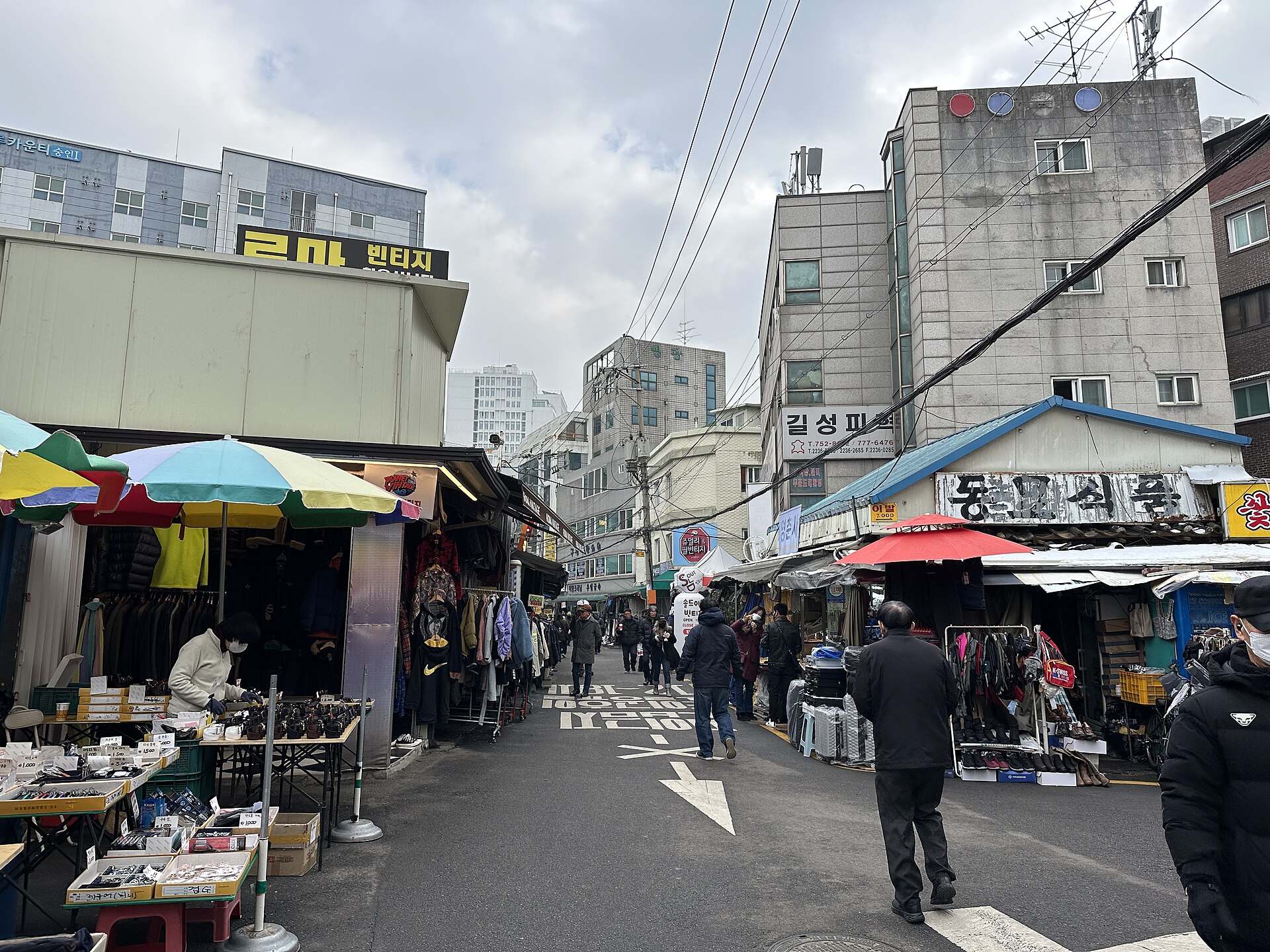
The Yard Sale of Masculinity
What Everything Must Go Reveals About Korean Men in 2026
A Man on the Lawn, and a World That Has Already Judged Him
In Everything Must Go, catastrophe does not arrive with orchestral force. It appears in daylight, in a suburban front yard, under the indifferent clarity of ordinary weather. Nick Halsey, played by Will Ferrell with bruised restraint, is fired for drinking, locked out of his home, and left staring at the public display of his own life: shirts, records, furniture, sports gear, the debris of a self once arranged into something recognizable. Rotten Tomatoes summarizes the premise with almost cruel efficiency: Nick, an alcoholic salesman, loses both his job and his wife on the same day, and a giant yard sale becomes his improvised survival strategy. The film holds a 73% critic score and a 52% audience score, a split that already tells us something important: critics largely admired its restraint, while some viewers remained unconvinced by its refusal to become either full comedy or full melodrama.
That split is central to the film's meaning. Everything Must Go is not interested in spectacular collapse. It is interested in 노출 (exposure). Nick is not merely ruined; he is made visible in ruin. He remains outside his own home, guarding the remains of his social legitimacy, as though masculinity itself had been dragged onto the lawn and tagged for sale. The front yard becomes an accidental theater in which 소유 (ownership), 체면 (face), and 역할 (role) are stripped of their dignity and converted into inventory. The film's emotional power lies in its refusal to overstate this. It understands that the most devastating failures are often not cinematic at all. They are administrative, domestic, humiliating, and public.
What makes the film endure is that it is not really about drinking, or even divorce, though both matter. It is about what happens when a man has built his worth from socially legible proofs—steady work, a house, a spouse, possessions, routine—and then wakes to find that the architecture has collapsed all at once. The critic consensus on Rotten Tomatoes notes that the film resists cliché and benefits from magnetic performances, and that judgment feels right: the story is less a redemption arc than a patient observation of a person trying to survive the sudden evaporation of identity.
Why the Film Feels Strangely Korean Now
To read this film in South Korea in 2026 is to feel a sharp shift in perspective. The lawn is American, the housing stock American, the idiom American. But the deeper narrative—the fragility of masculinity when it has been overinvested in work, property, and family role—translates with unsettling ease. The film's real subject is not just male failure. It is a social script of manhood that leaves very little behind when success falters.
Korea's recent statistics help explain why this translation feels so immediate. According to the government's 2024 marriage and divorce release, the mean age at first marriage for men reached 33.9. That number does not simply indicate changing tastes or delayed romance. It points to a long extension of uncertain adulthood, in which economic footing, housing, and relational stability are deferred later into life. A man is expected to be ready, but readiness itself keeps receding. The script remains culturally powerful even as the conditions for fulfilling it have become more unstable.
The rise of one-person households deepens this pressure. Official 2024 one-person household statistics report that in 2023 the annual income of one-person households was 32.23 million won, only 44.9% of the annual income of total households. Meanwhile, Seoul says one-person households reached roughly 1.66 million in 2024, accounting for 39.9% of all households, and explicitly links that increase to social isolation, housing instability, loneliness, safety concerns, and economic vulnerability. In other words, living alone in Korea is no longer a niche lifestyle pattern. It is an increasingly central social condition, and one that frequently carries economic and emotional compression with it.
This matters for men in particular not because women are untouched by precarity—they are not—but because Korean masculinity has historically been organized around a stronger expectation of visible provision. To be a man is still, in many settings, to be legible through 직장 (job), 집 (home), and 가족부양 (family provision). When those are delayed or destabilized, the resulting distress is not experienced as a single setback. It often becomes existential. The question stops being "How is my career going?" and becomes "Am I still a proper adult? Am I still socially readable?" Nick Halsey's yard sale is moving precisely because it stages that transformation in material form. He is not selling things. He is sitting beside the remains of social readability.
The labor market adds another layer. Yonhap reported on April 15, 2026, that employment among Koreans aged 15 to 29 fell by 147,000 year over year in March, marking the 41st consecutive month of decline, with the youth employment rate dropping to 43.6%. That statistic should not be simplified into a melodrama about lost men; it is broader than that. But it does intensify one particular social contradiction: the provider ideal remains culturally active while the pathways into secure provision have become thinner, slower, and more unequal. The result is not only financial anxiety. It is 불안 (anxiety) as identity weather.
This is where Everything Must Go speaks with unusual force to Korea in 2026. The film understands that a man can become publicly inadequate before he becomes visibly destitute. He can still own things. He can still shave. He can still crack a joke. Yet socially, he has already fallen outside the warm interior of adulthood. He stands near the house but cannot enter it. That image resonates in a society where many men remain physically present in urban life yet feel structurally postponed—late to marriage, uncertain in employment, isolated in housing, emotionally untrained for interdependence.
The Emotional Illiteracy Beneath the Crisis
The film's most painful truth is that Nick does not know how to describe what is happening to him. Alcohol is not just a vice in this story. It is a substitute language. Instead of grief, he drinks. Instead of shame, he drinks. Instead of asking for help, he waits until his collapse becomes undeniable enough that others cannot miss it. This is not merely a character detail. It is a diagnosis of a certain kind of masculinity.
That diagnosis lands hard in Korea. KOSIS currently lists Korea's 2024 high-risk drinking rate at 13.6% and its 2024 suicide rate at 29.1 per 100,000. Those are not abstract public-health figures. They are signals of a society in which distress often travels through the body before it travels through speech. A 2025 public-health report describes high-risk drinking for men in terms that remain recognizable within Korean drinking culture: consuming more than seven glasses, or about five cans of beer, in one sitting more than twice a week. The issue is not simply alcohol itself, but the social permission structure around it. Men may not be invited to narrate vulnerability directly, but they are often permitted to displace it into endurance, withdrawal, or intoxication.
The suicide data makes the stakes far graver. Yonhap reported in February 2025 that South Korea recorded 14,439 suicide deaths in 2024, the highest number in 13 years, and that 10,341 of those deaths were men. That disparity does not justify a crude "men suffer more" thesis; such arguments usually conceal more than they reveal. But it does force us to confront a pattern: male distress in Korea is frequently managed too late, too privately, and too wordlessly. By the time it becomes socially visible, it may already be acute.
This is why Everything Must Go is more than an actorly curiosity or a modest indie adaptation. It can be read as a study in 감정 문해력 (emotional literacy)—or, more precisely, the lack of it. Nick has responsibilities, habits, inventory, old competencies. What he does not have is a usable vocabulary for collapse. He has been formed to perform steadiness, not to narrate disintegration. And that, too, is legible in Korean masculinity. Men are often trained to be dependable before they are taught how to become interpretable to themselves.
The Korean Question Is Not Whether Men Are Hurting. It Is What Kind of Masculinity Leaves Them So Unprepared
It would be easy, and intellectually lazy, to turn this analysis into a grievance essay about men. That would miss the point. The deeper issue is not that men are newly victimized; it is that the old masculine bargain has become less sustainable while remaining culturally seductive. Work still confers legitimacy. Marriage still confers adulthood. Housing still confers respectability. But access to all three has become more unstable, more delayed, and more stratified. The result is not only economic frustration. It is symbolic exhaustion.
That exhaustion matters for culture, politics, and consumption alike. In a media environment saturated with self-optimization, status display, and achievement metrics, the unheroic male breakdown becomes harder to see and harder to admit. Korean popular discourse often oscillates between two unsatisfying portraits of men: the competent winner and the resentful failure. What is missing is a thicker language for the ordinary man in structural drift—the man who is not monstrous, not exemplary, simply disoriented by a world in which the old coordinates no longer function. Nick Halsey is compelling precisely because he lives in that middle zone. He is not a symbol of innocence. He is not a villain either. He is a person whose social form has cracked.
That is why the film's tenderness matters. It does not rescue Nick through a triumphant return to patriarchal competence. It does not give him a grand speech, a new promotion, a miraculous romance, or a clean reintegration into success. It gives him something much smaller and much more radical: contact. A neighbor. A boy. A sponsor. A few fragile human relations that do not depend entirely on performance. The film seems to suggest that the opposite of collapse is not mastery. It is connection.
For Korea in 2026, that may be the most urgent insight of all. A society cannot keep asking men to derive personhood almost exclusively from utility and then act surprised when failure becomes annihilating. If masculine worth is too tightly bound to income, housing, marriageability, and emotional self-containment, then any rupture in those domains will feel like ontological erasure. The question, then, is not merely how to restore men to productivity. It is how to construct forms of belonging that survive non-productivity, disappointment, delay, and shame.
What the Lawn Leaves Behind
The yard sale in Everything Must Go is such an elegant metaphor because sales do two things at once: they reduce value, and they reveal value. Objects are handled, priced, judged, and stripped of aura. Something similar happens to Nick. His collapse is humiliating, but it is also clarifying. Once the props of his old life are dragged into public light, a harder question emerges: what remains of a man when usefulness, possession, and role have all been discounted?
That question is no longer merely American. It belongs, with growing intensity, to South Korea. It belongs to a society where one-person households are rising, where youth employment is strained, where emotional isolation is policy-visible, where high-risk drinking persists, and where male suicide remains catastrophically high. It belongs to a country modern enough to individualize aspiration, but still traditional enough to moralize failure.
So the enduring force of Everything Must Go lies here: it asks whether a man can remain human after he stops being convincingly useful. That is not simply a cinematic question. It is a social one, a policy one, and in Korea today, a deeply moral one. The real tragedy is not that Nick falls apart. The real tragedy is how little language he has for the falling, and how long he must sit beside it before anyone teaches him that a self might still exist after the script has failed.
Watch the Full Film
References
Ministry of Data and Statistics. (2025). Marriage and divorce statistics in 2024.
Ministry of Data and Statistics. (2024). 2024 statistics of one-person households.
Public Health Weekly Report. (2025). Trends in the prevalence gap of high-risk drinking between cities or provinces during 2015–2024.
Rotten Tomatoes. (n.d.). Everything Must Go.
Seoul Metropolitan Government. (n.d.). Support for one-person households.
Statistics Korea / KOSIS. (2026). Statistical indicators.
Yonhap News Agency. (2025, February 26). Suicide deaths in S. Korea hit 13-yr high in 2024; daily average at 39.5: data.
Yonhap News Agency. (2026, April 15). (2nd LD) S. Korea adds 206,000 jobs in March, topping 200,000 for 2nd straight month: data.